




Next-level part production
Origin® Two brings advanced 3D printing capabilities to end-use production, tailored for applications requiring high accuracy,
repeatability, tight tolerances and smooth surface finish.
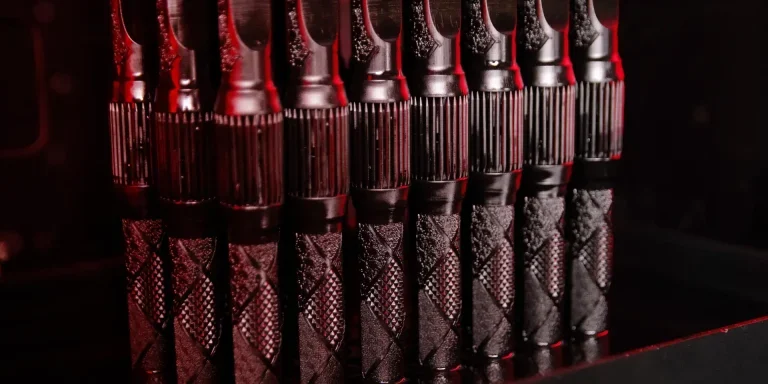
A transformative 3D printer enabling mass production of end-use parts in a diverse range of high performance materials. Achieve industry-leading detail and consistency with Programmable PhotoPolymerization P3™ technology.
Stratasys Origin Two Features
Why choose a Stratasys Origin Two
Elevating industrial 3D printing to a completely new level with unparalleled accuracy, proven repeatability, tight tolerances, and superb surface finish.
3D printing has revolutionized product design and prototyping, but its true potential lies in solving supply chain and sourcing challenges as it offers an economic viable solution for small batches end-use production:
- Local, on-demand printing of spare parts for reduced inventory and next-day delivery.
- Bringing tooling and final production in-house to mitigate supply chain disruptions.
- Meeting volatile demand and quickly producing small run, cost effective, built-to-order quantities.
- Reducing SKUs through part consolidation using designs not possible with traditional methods.
Achieving these benefits requires access to specific 3D printing technology that can fulfill the most stringent end-use production standards—especially for accuracy, repeatability, surface finish, and functional and mechanical performance, surpassing prototyping capabilities and entry-base product quality.
Stratasys Origin Two Benefits
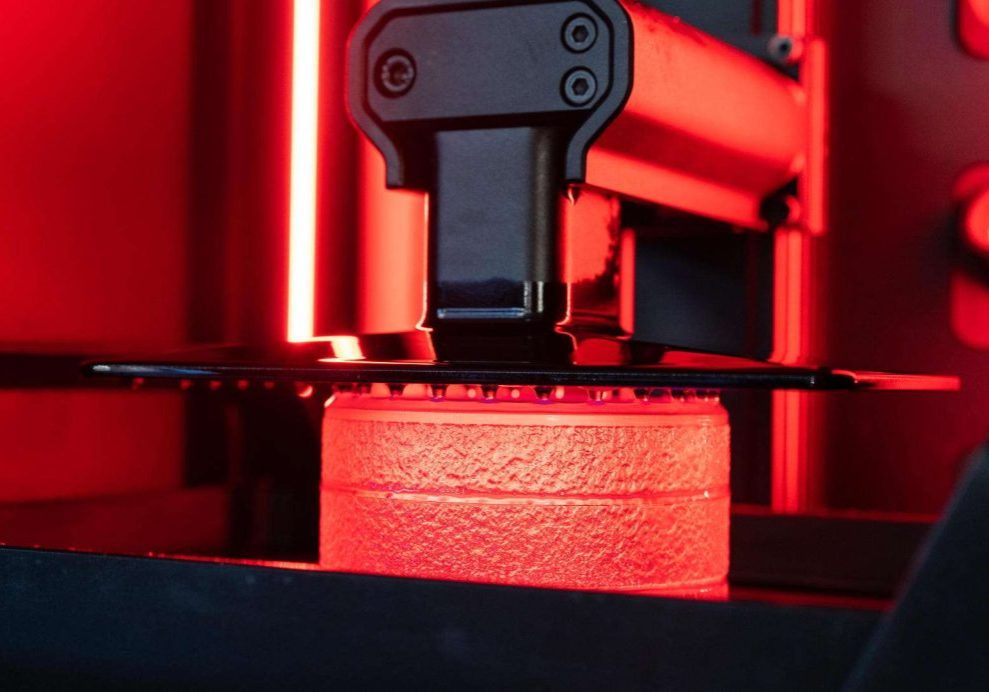
An evolution of digital light processing
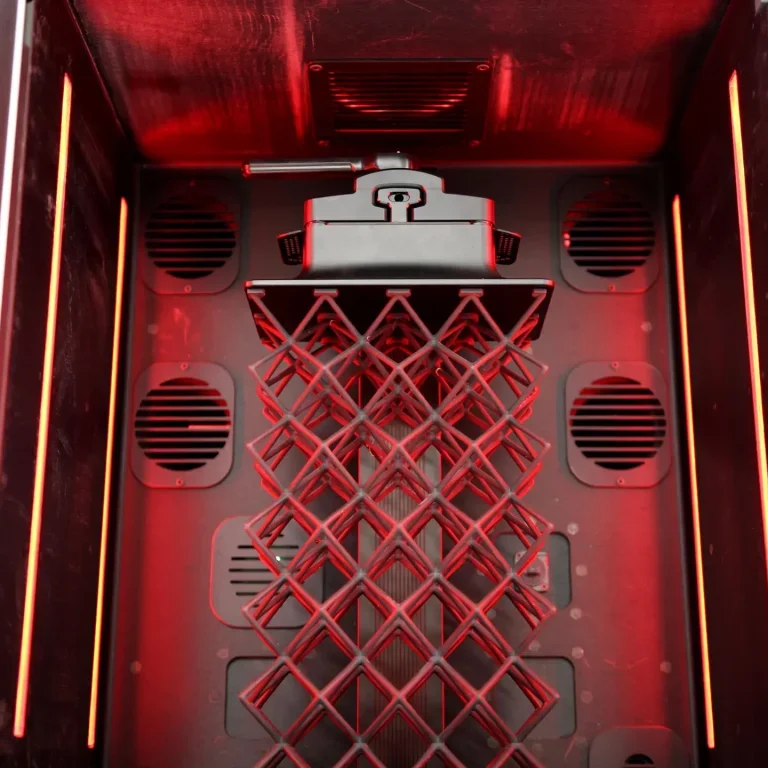
P3 powers the Stratasys Origin Two. The tightly synchronized print process includes pneumatic controls to reduce pull forces during the print process, resulting in exceptional surface quality, without sacrificing speed or isotropy.
Coupled with an advanced 5K light engine, P3 enables the highest 3D printed part quality and throughput the industry has seen.
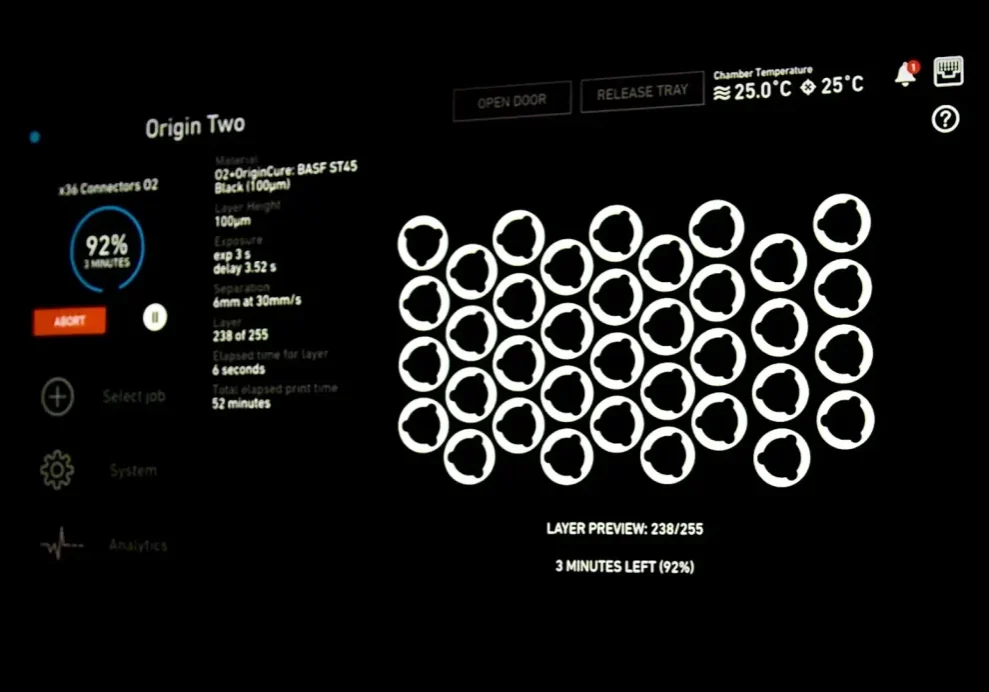
Achieve repeatability without recalibration
Origin Two delivers high accuracy and proven repeatability, without the need for recalibration of build heads between prints or even across different printers.
The new build head and validated curing solution of Origin Cure™ lets you set up a print job once and simply repeat – today, tomorrow, or next month – with the same print results, anywhere in the world.
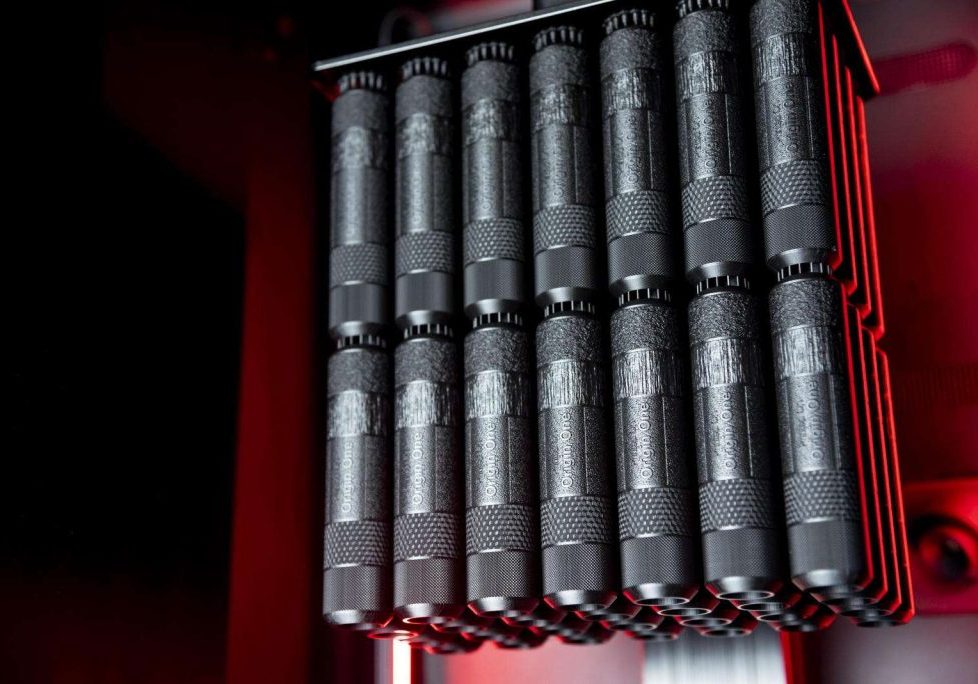
Production 3D Printing
High throughput, combined with best-in-class repeatability, helps you expand production without delays, so you can launch faster and respond flexibly to shifts in demand, while maintaining minimal inventory.
Leverage the design freedom of 3D printing to reduce part count, simplify your workflow and improve product performance.
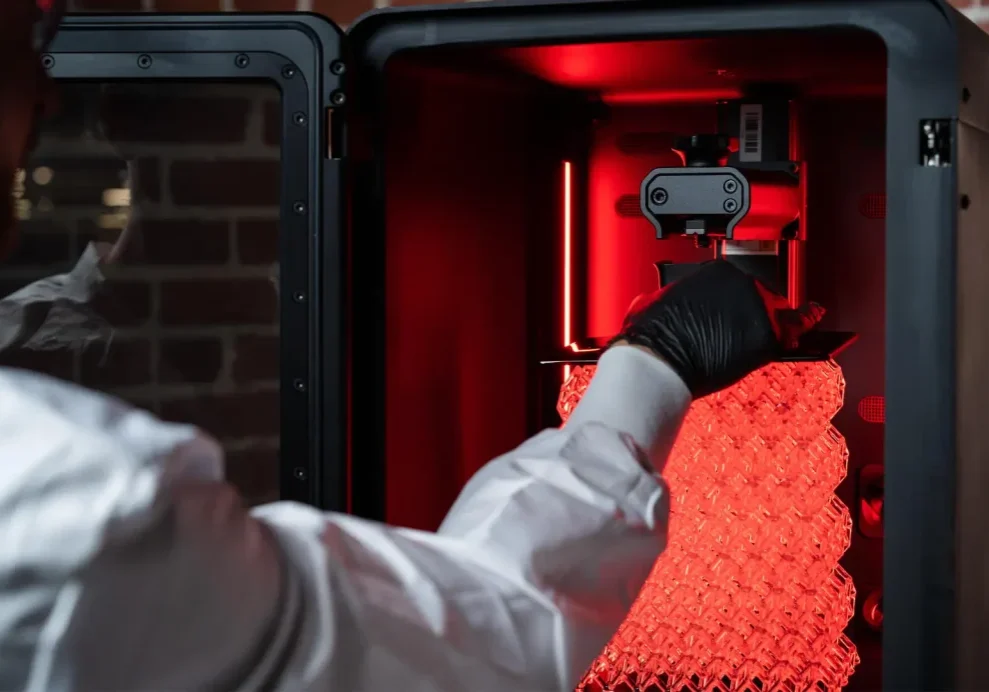
Production-grade Resin Materials
Stratasys works with leading chemical companies to co-develop innovative photopolymers in several categories to unlock end-use applications in 3D printing.
Choose from a wide range of single component, commercial-grade materials, developed on and validated for Origin Two. Resins are engineered to be easy to handle and rapidly post-processed, with long shelf lives.
Stratasys Origin Two Part Features
It takes an ecosystem of materials to transform an industry
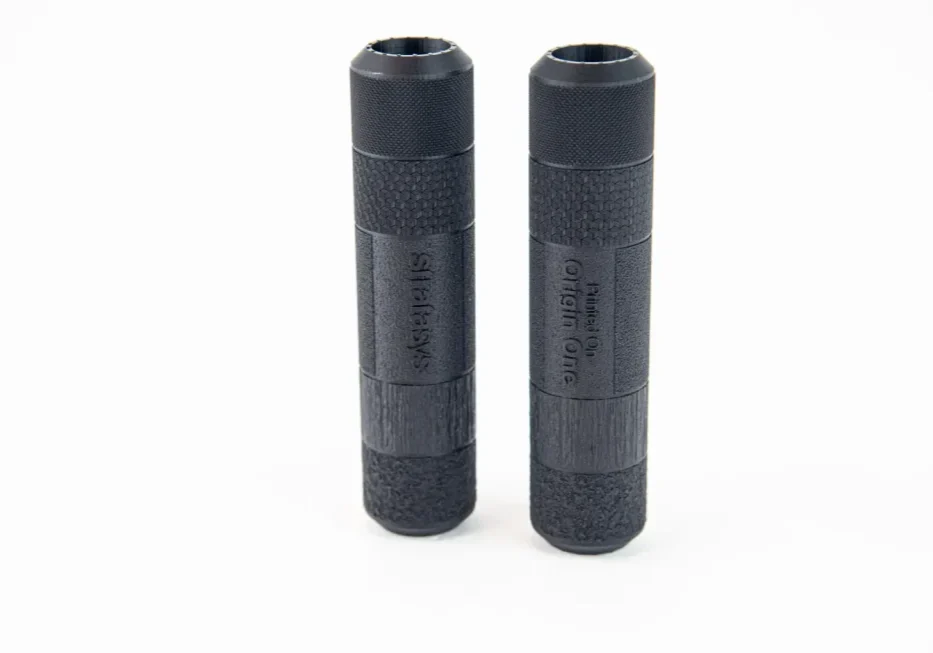
Heat-Resistant
Materials for application specific requirements such as flame smoke and toxicity, HDT or mold durability
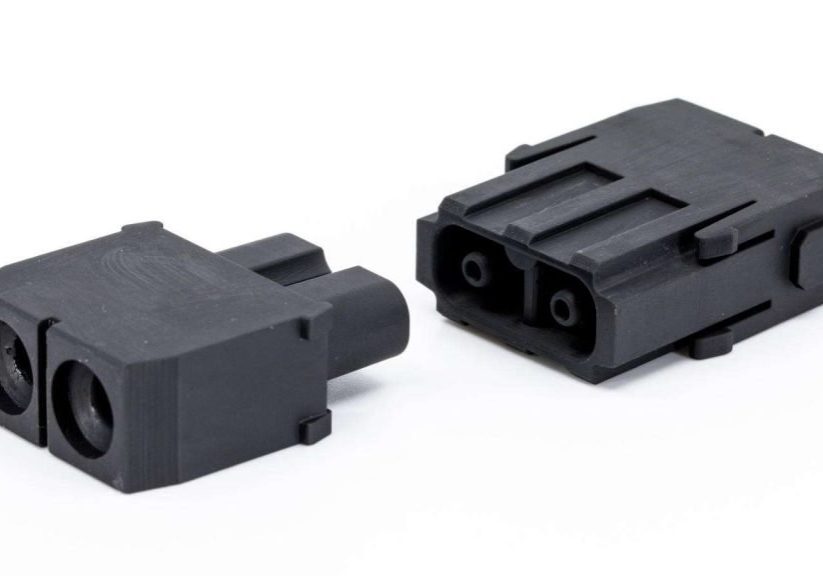
Tough
Impact resistant resins for functional applications that need to perform under stress and high-load conditions.
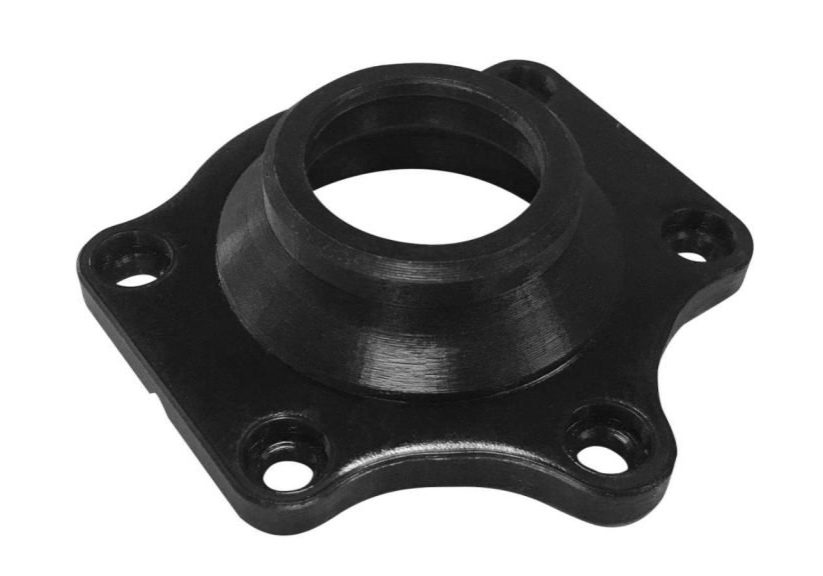
General Purpose
Fast printing materials for end-use applications requiring cosmetic surfaces, fine features and high accuracy.
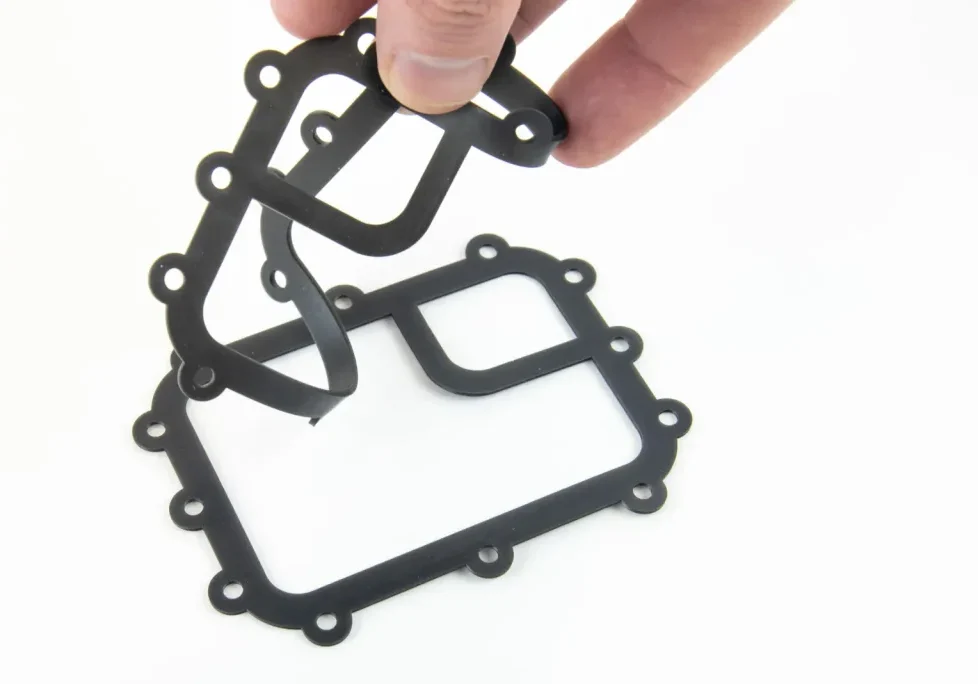
Elastomers
Resilient high-resolution elastomers for applications requiring excellent tear strength or rebound performance.
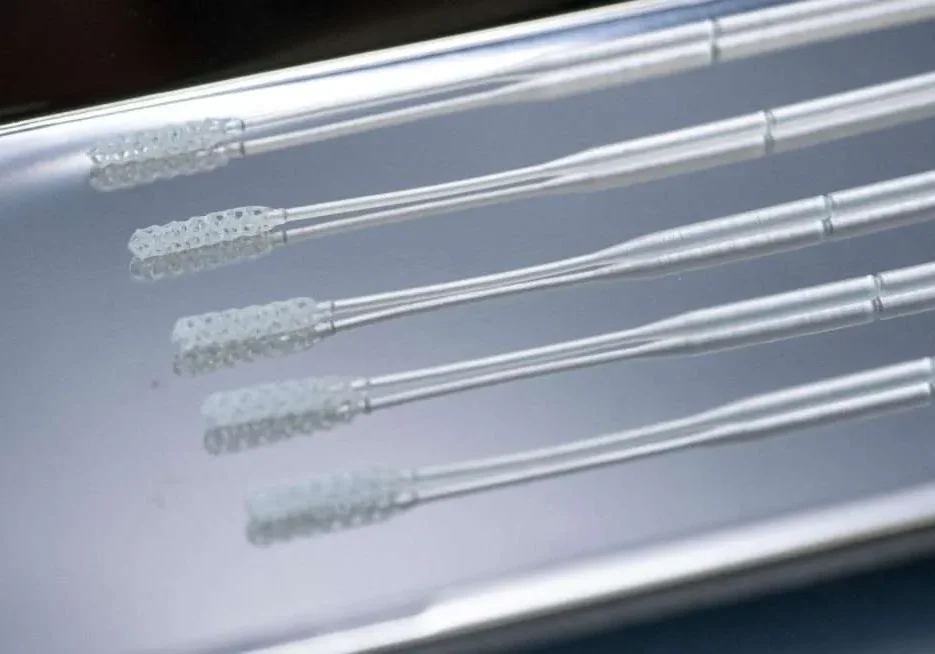
Medical
Medically certified materials for devices where aesthetics, durability and biocompatibility are critical.
Quick Facts
Origin Two Industrial Production Printer Features & Benefits
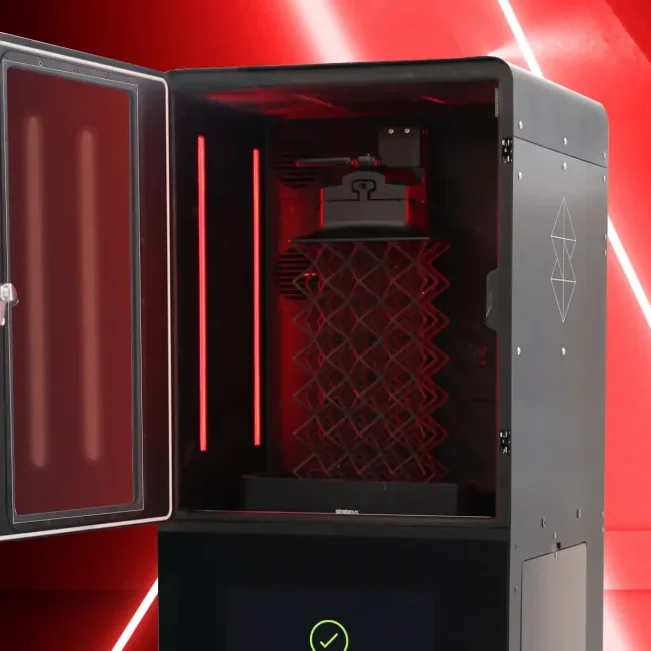
The exceptional repeatable accuracy, tight tolerance and surface finish is the result of advanced technological engineering:
- A more performing projector achieves up to 50 µm accuracy for validated applications
- Accommodating high-temperature as well as high-viscosity materials
- The light engine’s irradiation levels result in parts with higher green strength and properties mimicking final-stage characteristics
- Postprocessing time is minimized to just a few minutes.
- The patented pneumatic mechanism reduces separation forces achieving injection-molding surface smoothness at print speeds below 20 mm/hour.
- The heated chamber maintained at 60°C enables reliable printing of materials up to 300°C.
- A validated post-processing workflow, utilizing Origin Cure™, rigorously tested internally and externally.
Stratasys Origin Two Specifications
| Feature | Specification |
|---|---|
| Technology | Technology Programmable PhotoPolymerization P3™ |
| Build Envelope | 192 x 108 x 370 mm / 7,672 cm3 (7.5 x 4.25 x 14.5 in. / 462 in3) Maximum length on the diagonal — 220mm (8.6 in.) |
| Minimum Feature Size | Minimum Feature Size Material and design dependent, as low as 50μm |
| Achievable Accuracy | XY and Z tolerance of up to +/-50 μm for validated applications and +/- 100 μm in general |
| Repeatability | >95% of prints are within +/-50* μm across printers and build heads* *Between 25 μm – 200 μm layers with OpenAM™ |
| Surface Finish | Surface roughness of up to 2μm Ra* |
| Light Engine | 5K projector with 38.5 μm pixel size and tight 2.5 standard deviation projector uniformity |
| Pre-Print Software | Stratasys GrabCAD Print™ or optional 3rd party solutions Touchscreen printer user interface |
| Regulatory Compliance | CE, UKCA, FCC, RCM, NRTL [pending] |
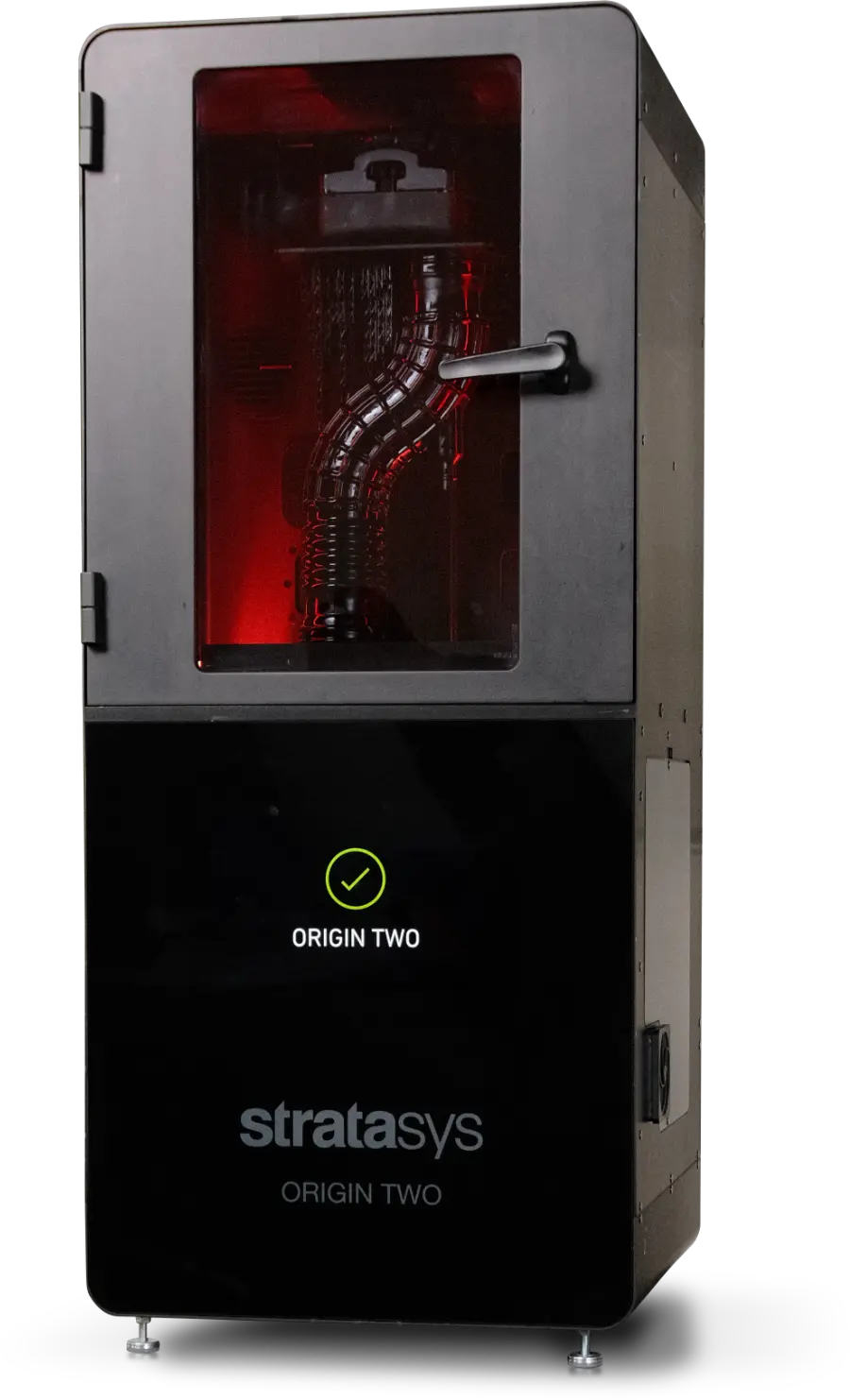
| System Size and Weight | Width: 50 cm (19.7 in.) / Depth: 52 cm (20.5 in.) / Height: 117 cm (46 in.) Weight: 86 kg (189.5 lbs.) |
| Facility Requirements | |
| Power Requirements | 100-120 VAC, 50/60Hz, 7.1A, 1 Ph or 200-240 VAC, 50/60 Hz, 3.5 A, 1 Ph |
| Network Connectivity | Ethernet / Offline connectivity available with Origin Two Local |
| Ventilation | Refer to photopolymer material MSDS or contact us for guidelines |
| Operating Conditions | Operating temperature 15°C to 30°C (59°F to 86°F) Operating Humidity 30% to 70% |
| Gas Input (optional) | Facility air or inert gases |
| Gas Exhaust (optional) | Facility exhaust |
| Material Handling | |
| Resin Tray Capacity | 2L |
| Resin Storage Temp | Typically 15°C to 30°C (59°F to 86°F) |
| Security Features | |
| Printer Authentication | Cryptographically-secure handshake |
| Network Security | Industry-standard end-to-end encryption |
Stratasys Origin Two Accessories
Air extraction and part curing solutions for a complete workflow from Stratasys
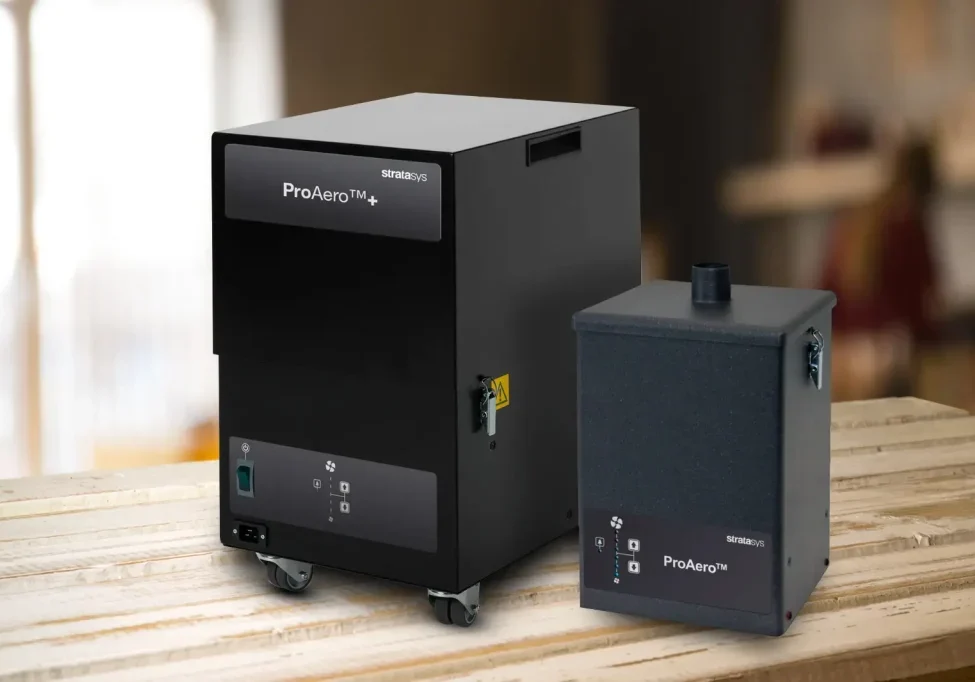
Stratasys ProAero
Stratasys 3D printer professional air extraction system for the office or industrial space, designed to work with the Origin Two.
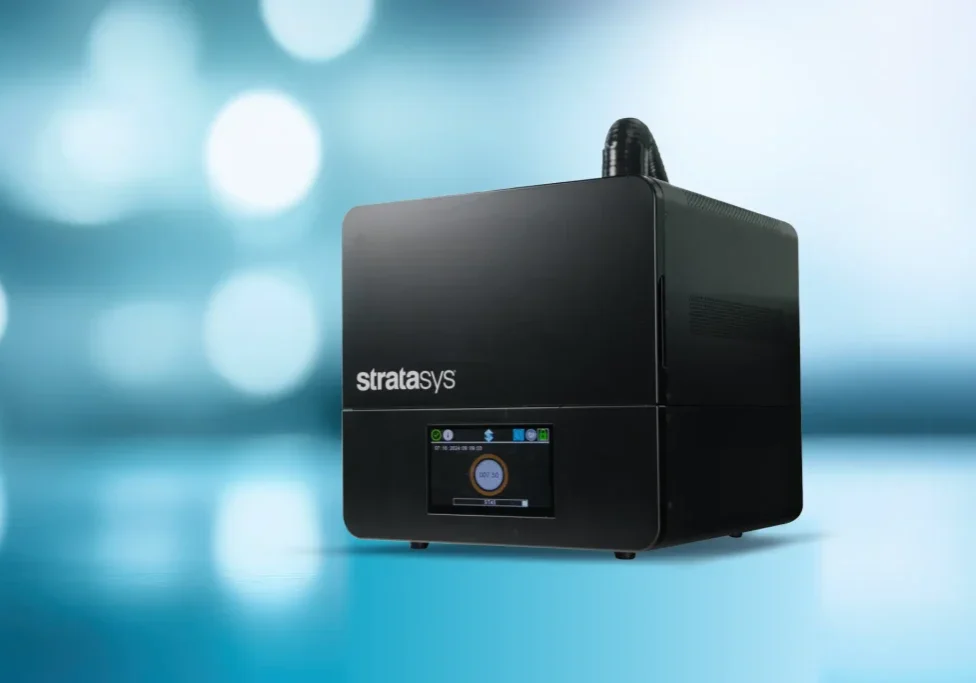
Stratasys Origin Cure
The Stratasys Origin Cure™ system is engineered to lock in accuracy, repeatability and detail of your Origin® printed parts.
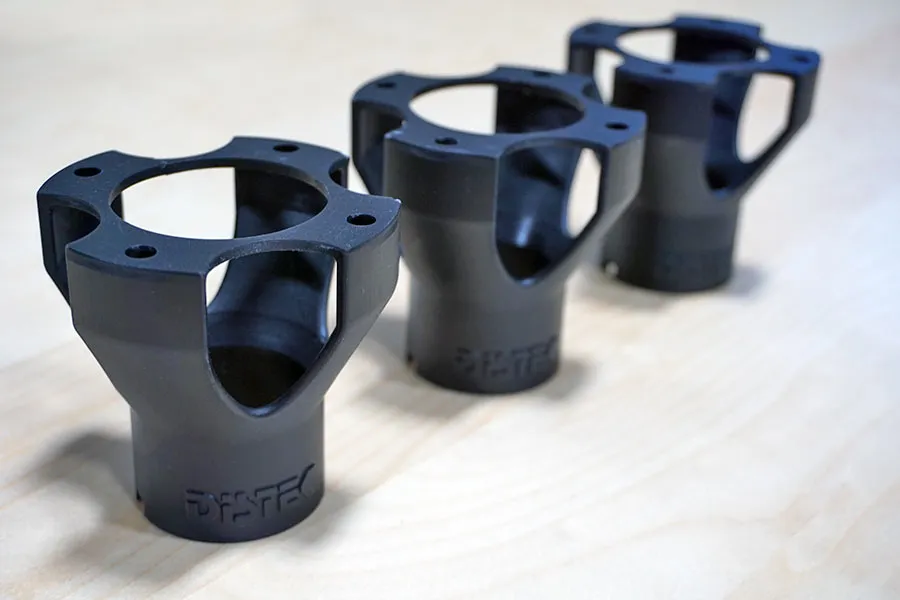
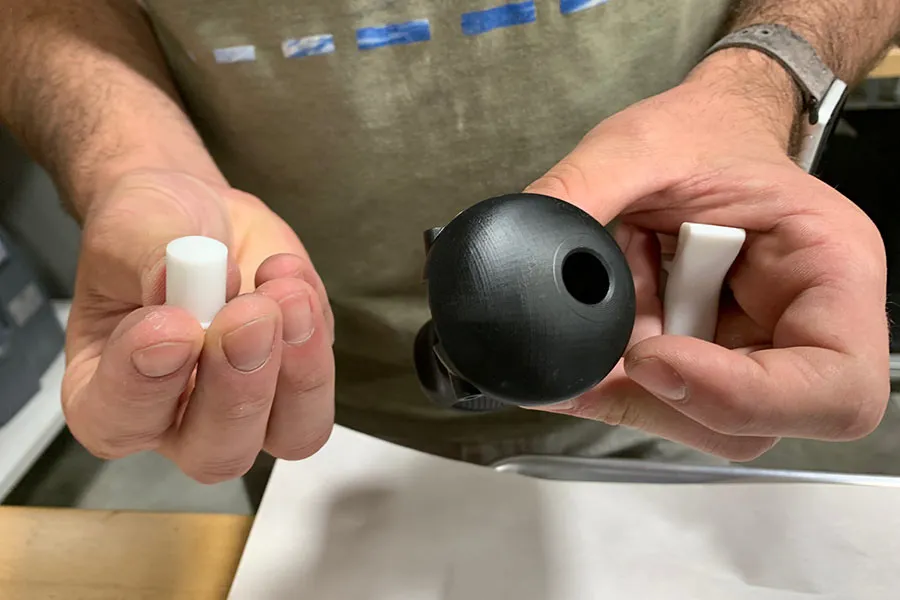
Example Parts
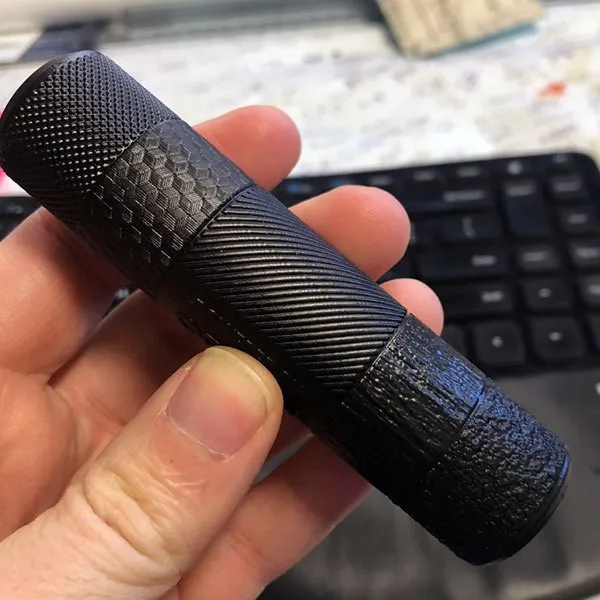
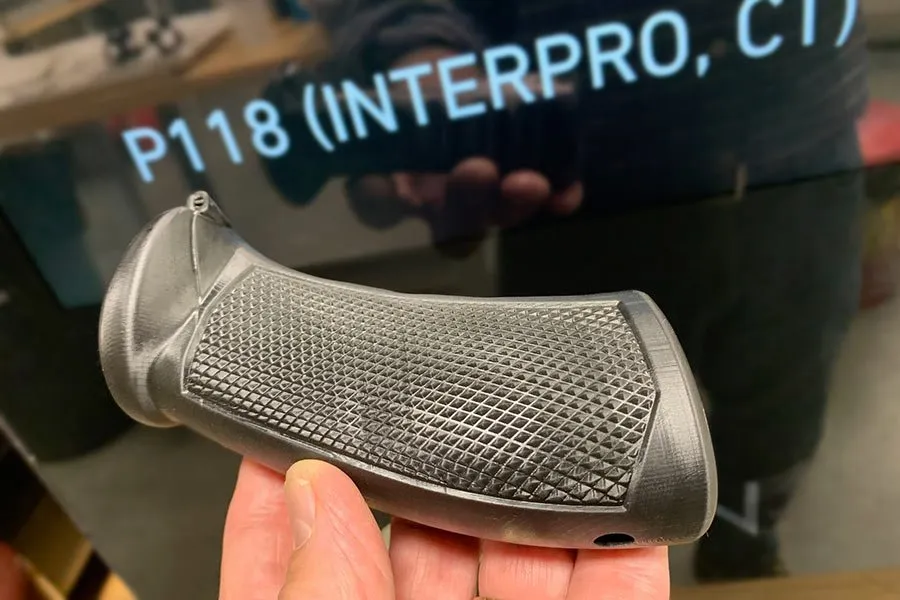
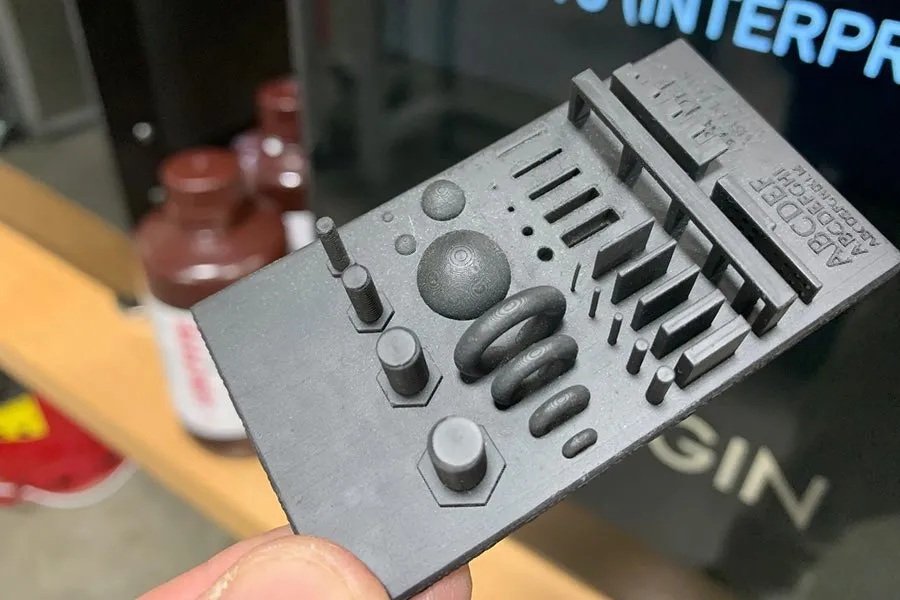
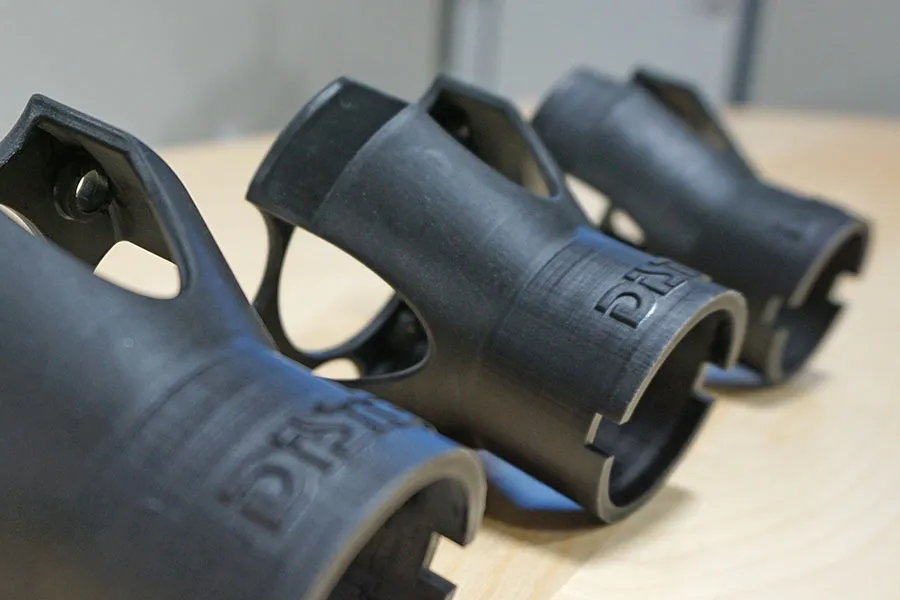
Example durable Origin P3 production parts in a diverse range of high performance materials, pick on the images below to enlarge

Stratasys Origin Two P3 Materials
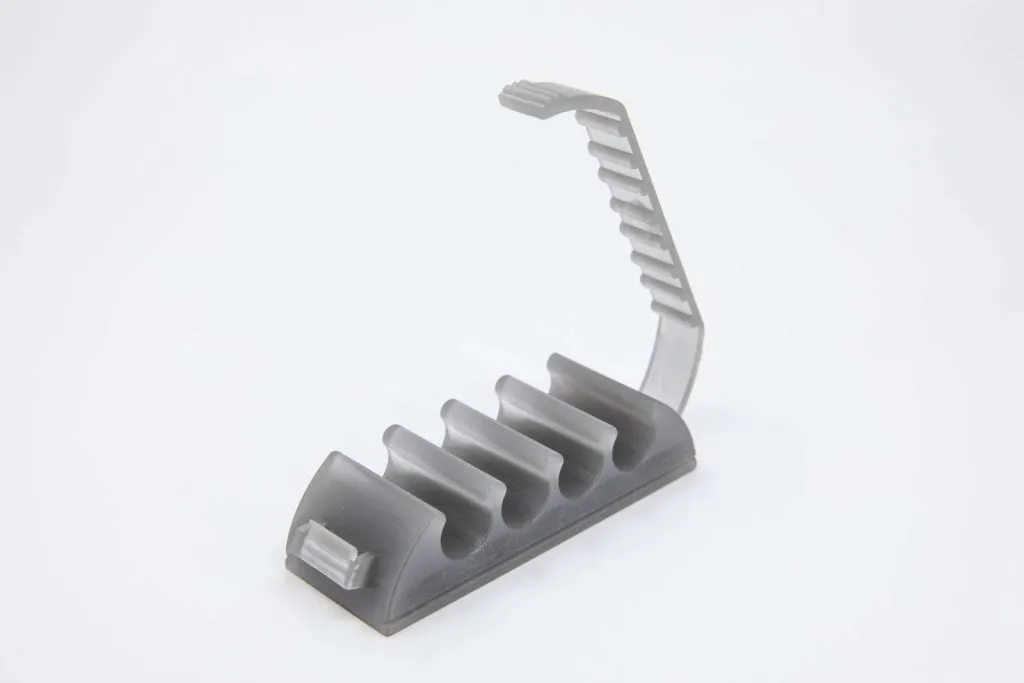
Print your part from a variety of photopolymers
Find All Your Stratasys Materials
Looking for industrial-grade materials for your 3D printer?
We carry a full range of official Stratasys materials, including filaments and resins, for all your production needs.
Industries we work with
TriMech Advanced Manufacturing is used in a wide variety of industries
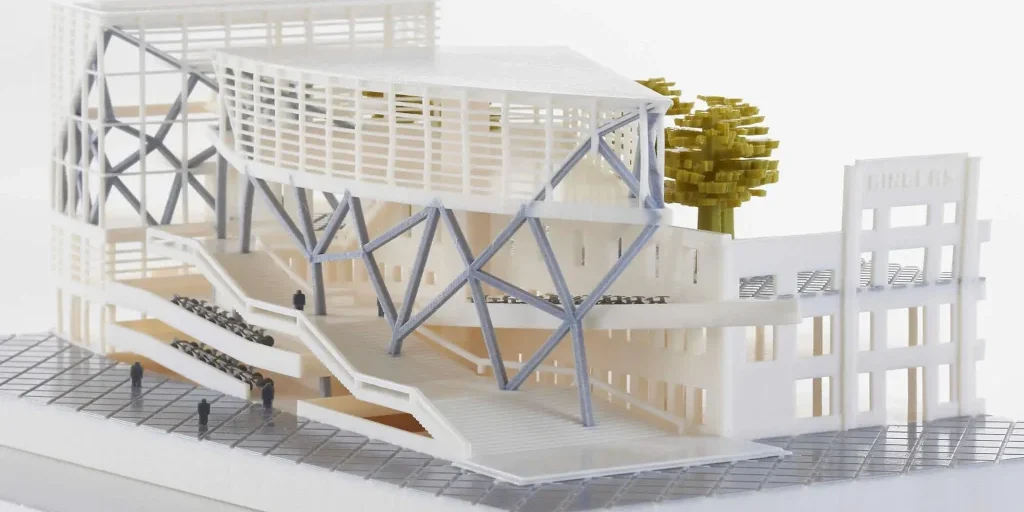
Architectural Design & Construction
- Model making
- Urban planning
- Concepts

High Tech & Consumer Products
- Aesthetic and function testing
- Concepts and prototypes
- Sales and marketing models
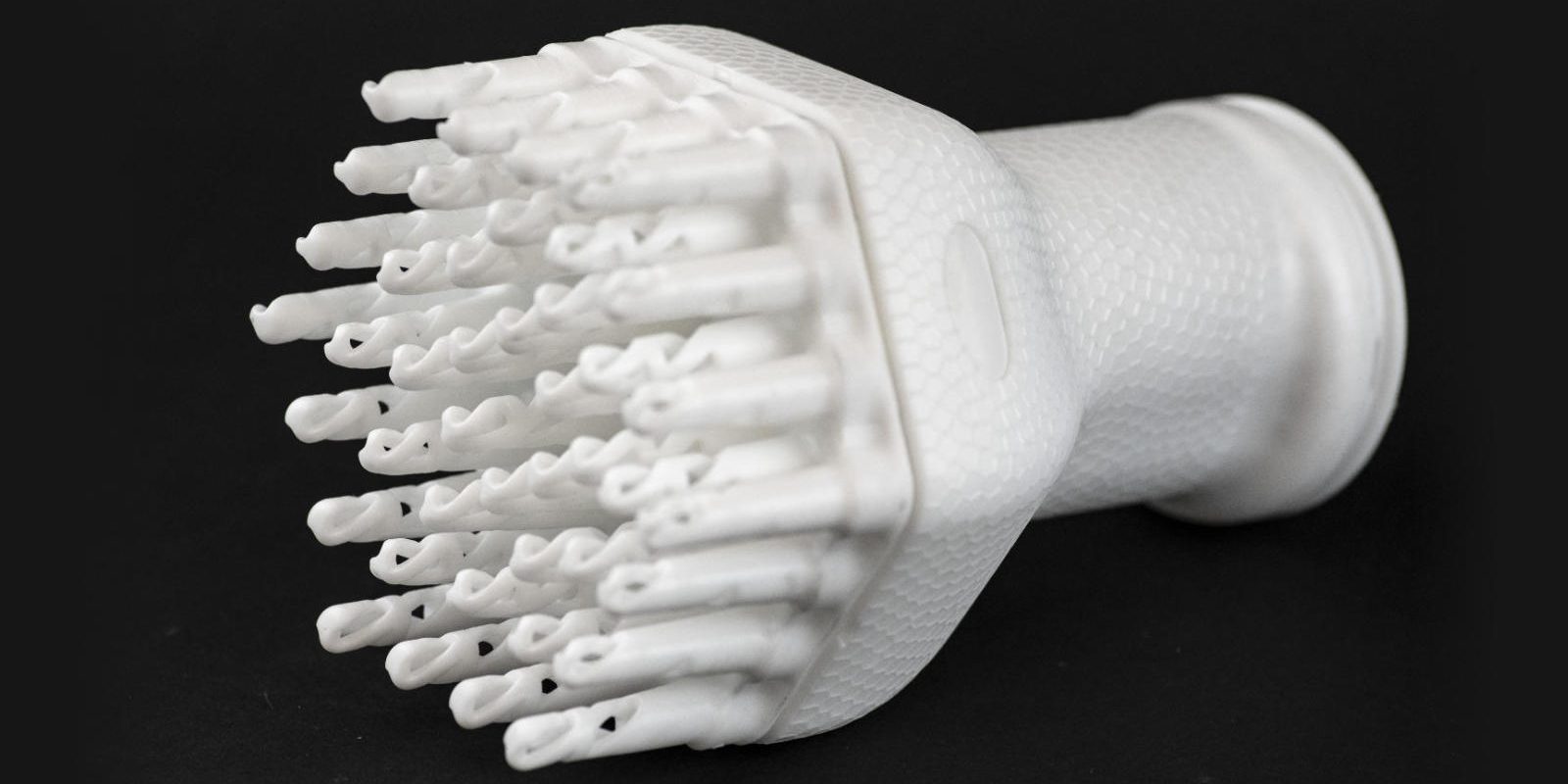
Dental, Medical & Life Sciences
- Anatomical models
- Medical devices
- Orthopedics
- Prosthetics
- Surgical planning models
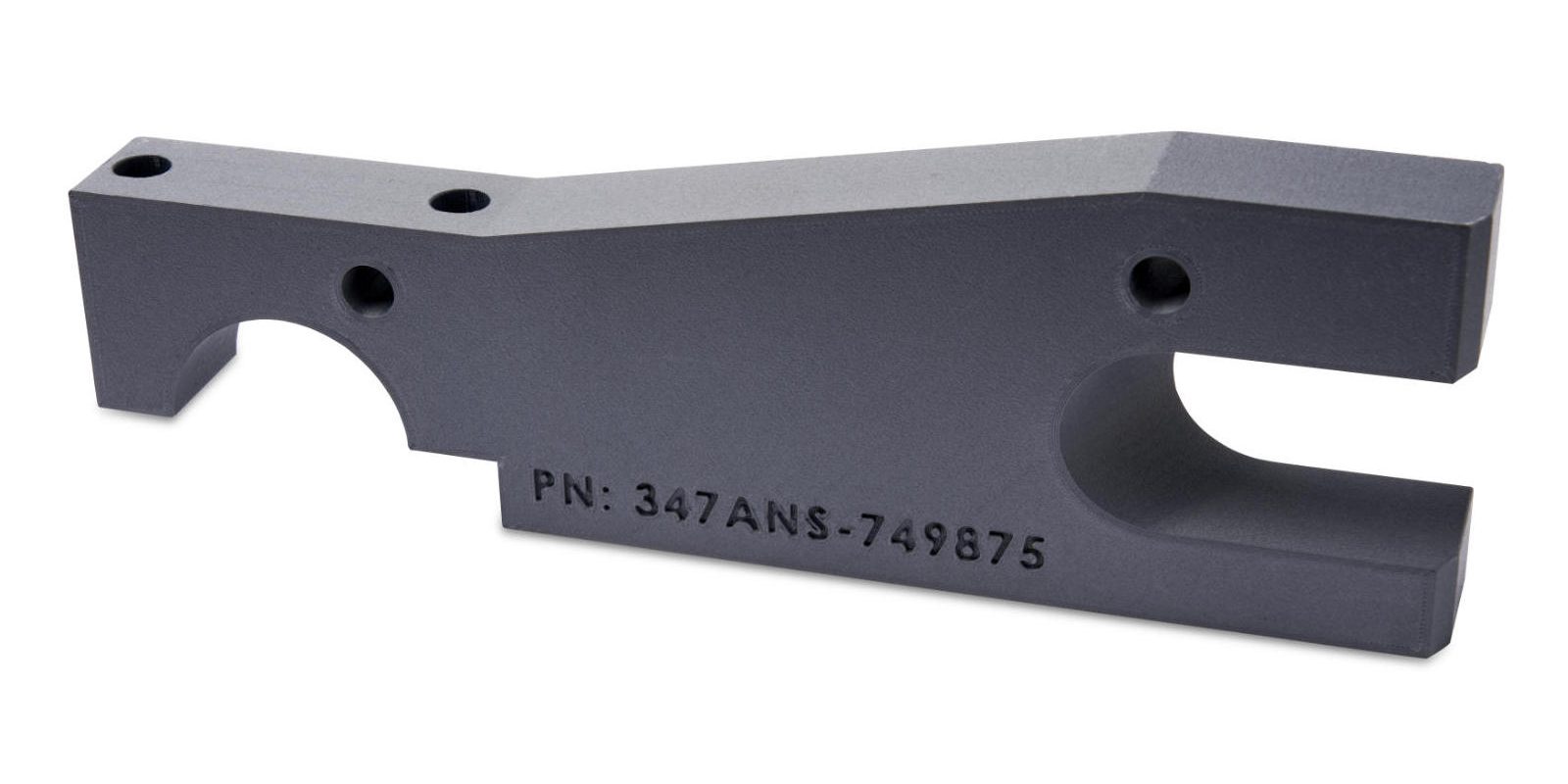
Industrial Products, Mold Tool & Die
- Jigs, fixtures, and assembly tooling
- Injection molding
- Silicone molding
- Sand and investment casting
- Thermoforming
More 3D Printers
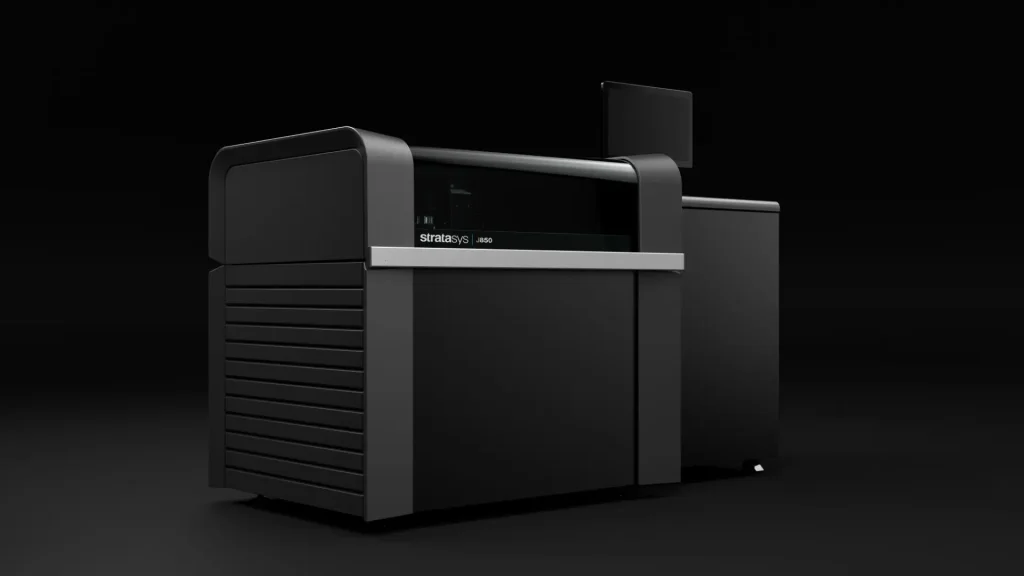
Stratasys J850 Core
The Stratasys J850 Core delivers accessible professional PolyJet 3D printing for fast, accurate multi-material prototypes focused on form, fit, and function.
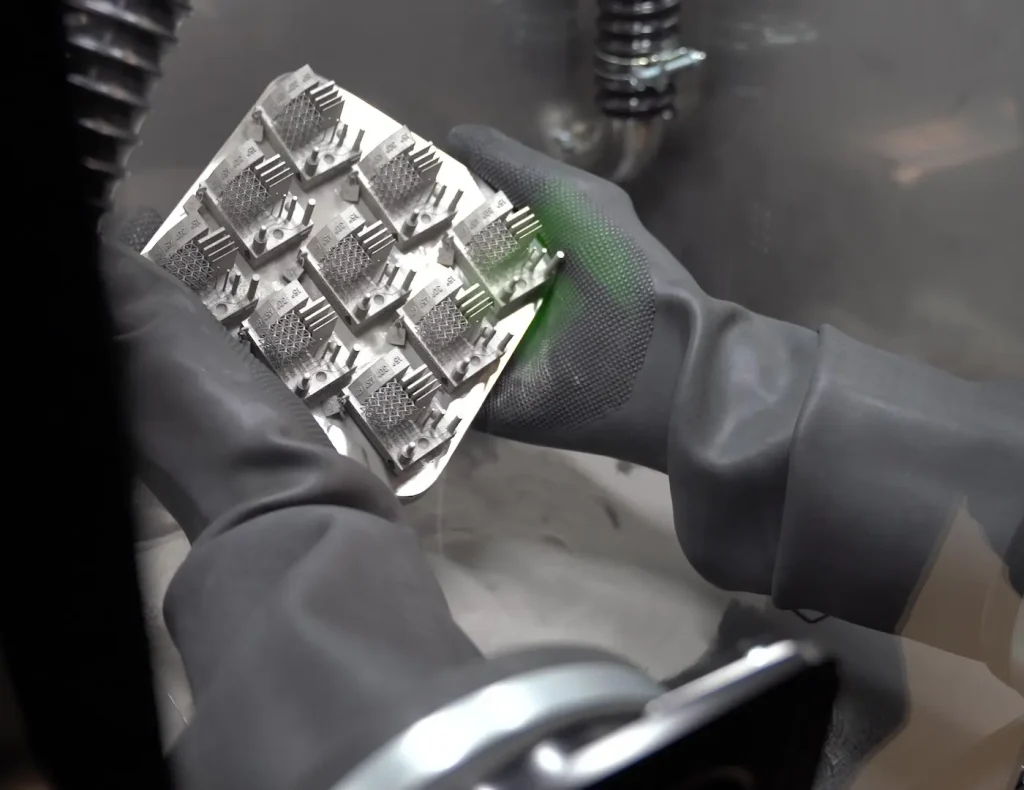
One Click Metal PROline
The One Click Metal PROline is the perfect metal 3D printing solution for high-volume production

Stratasys J5 Digital Anatomy
The Stratasys J5 Digital Anatomy 3D Printer enables the creation of biomechanically accurate, highly realistic anatomical models.