





Accelerating Race Ready Engineering Through Digital Twins and Advanced Manufacturing
How Capone Motorsports cut design cycles in half and unlocked new performance potential.
Related Topics
Solutions featured in this Case Study
 3D Scanners
 Manufacturing Software
Introduction
In professional motorsports, engineering speed is inseparable from competitive success. For Capone Motorsports, the small but highly capable team behind the Tower Motorsports LMP2 effort in IMSA, maximizing performance with limited resources is a constant challenge. By partnering with TriMech, Capone Motorsports transformed how they capture, design, simulate, and manufacture critical components – without expanding headcount or infrastructure.
The Challenge
As one of the smaller teams on the grid, Capone Motorsports must move quickly between race weekends while maintaining absolute precision. The team recognized the strategic importance of advanced manufacturing technologies, including 3D scanning, additive manufacturing, and modern design and simulation tools. However, resource limitations made it difficult to adopt these capabilities internally.

Capone Motorsports faced limitations with internal equipment, along with long turnaround times and high costs for replacement parts. With regulations banning wind tunnel testing, the team identified simulation as a potential workaround; however, the goal of developing digital aerodynamic simulations has been a challenge when balancing normal race-race operations. With restricted access to advanced equipment, personnel, and time, the team was leaving valuable performance gains unrealized in a highly competitive environment.
The Solution
Capone Motorsports turned to TriMech after recognizing the company’s long-standing leadership in 3D technologies and its comprehensive product portfolio. Just as important was TriMech’s deep involvement in motorsports, allowing Capone to work with specialists who understood the urgency, precision, and technical language of racing. After TriMech was able to solve a nagging problem just-in-time for a key test, it was clear they were the right partner for the organizations larger engineering challenges.
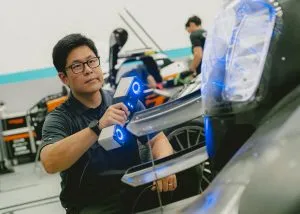
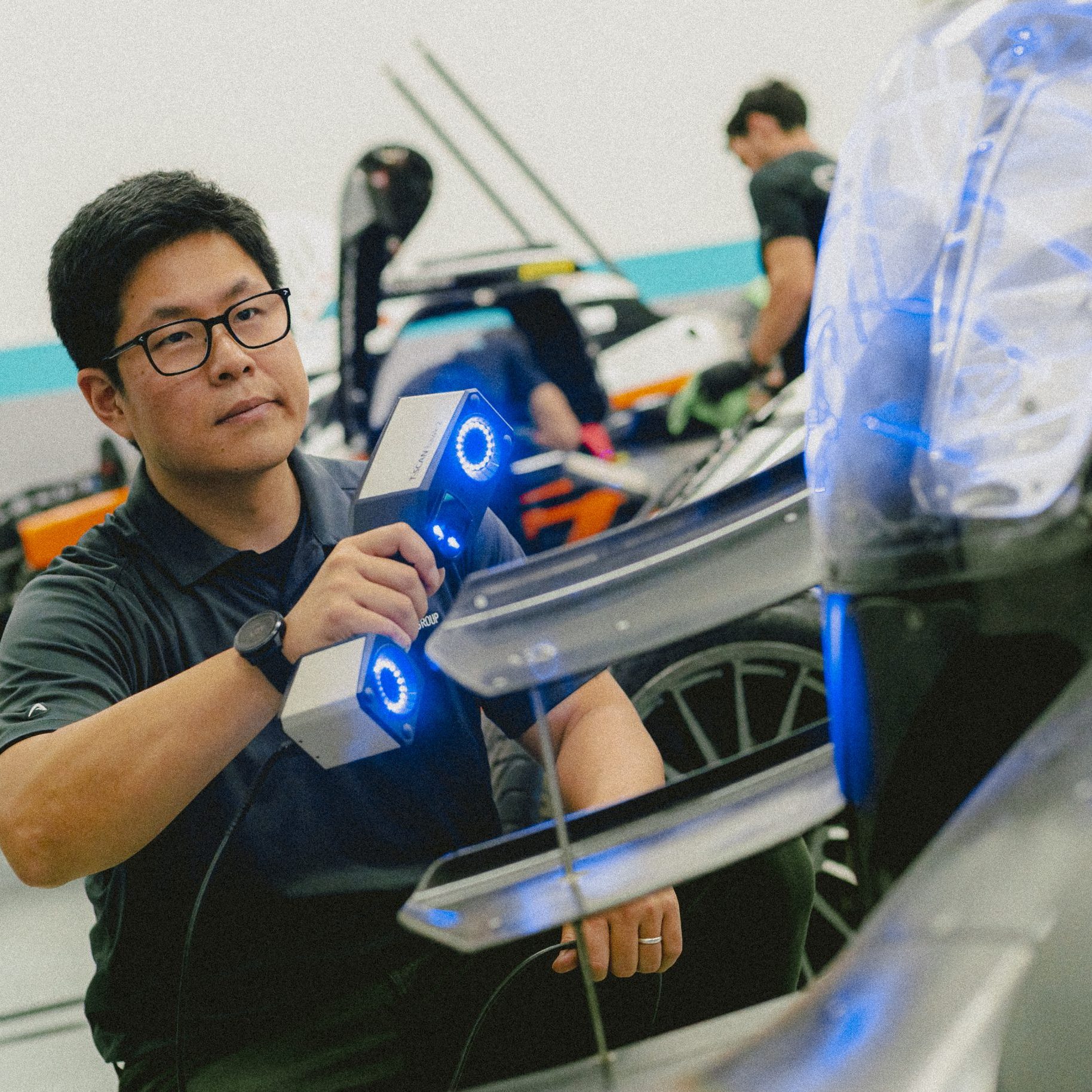
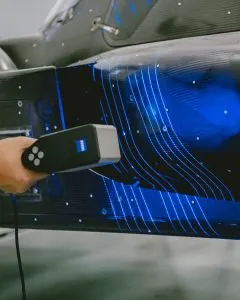
The TriMech team, with project leadership from Conner Janeteas, Director of Innovation, collaborated with Capone Motorsports to identify several key opportunity areas – metrology, design, and additive manufacturing. After identifying metrology as the top priority, TriMech’s 3D Scanning Services team then led the charge – the engagement focused on creating an extremely accurate digital representation of Capone’s Oreca LMP2 car using a ZEISS T-SCAN Hawk 2. Leveraging the system’s speed, portability, and metrology-grade accuracy, TriMech delivered high-fidelity scan data that became the foundation for Capone’s engineering workflows.
That data enabled Capone Motorsports to fully leverage Dassault Systèmes design and simulation solutions, supporting reverse engineering, clean sheet design, and simulation driven aerodynamic development. TriMech supports these products with industry leading training and technical support, ensuring Capone’s engineers can confidently apply the tools in real-world race operations. The relationship extended beyond scanning, with Capone also relying on TriMech’s Advanced Manufacturing Services for parts exceeding the capacity of their inhouse additive equipment.
Results
The impact was immediate and measurable. By leveraging TriMech’s scanning services, Capone Motorsports achieved a 90% reduction in time and a 70% reduction in cost compared to onboarding their own equipment, while gaining access to hardware that would have been impractical to own internally. Design cycle times were reduced by 50%, enabling faster iteration and catalyzing performance development.
With accurate digital twins in place, the team unlocked simulation capabilities and could correlate aerodynamic simulation results against known data, increasing confidence in design decisions. Capone Motorsports is further enabled to manufacture allowable parts in-house and seamlessly scales production through TriMech for larger or more complex components, effectively extending their engineering capacity without expanding their footprint.
Looking Ahead
Looking ahead, Capone Motorsports continues to build on this digital foundation as racing programs evolve and performance targets increase. The partnership with TriMech provides ongoing access to advanced technologies, specialized expertise, and scalable manufacturing support, allowing the team to focus on extracting every possible advantage on and off the track.
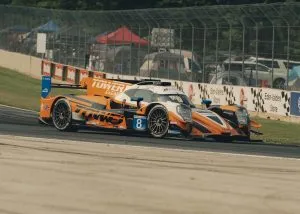
“It’s been great to have the team from TriMech here. They fit in immediately with our group, understood our objectives, and felt like a natural extension of our organization,” said Rick Capone, Team Owner. “Looking forward, TriMech Group’s relentless pursuit of excellence will continue to help us set new standards for what’s possible in modern motorsports.”
To learn how TriMech helps engineering teams move faster, design smarter, and compete at the highest level, connect with TriMech today.
Related TriMech Solution
Learn more about the solutions featured in this Case Study:
More Case Studies and News Stories
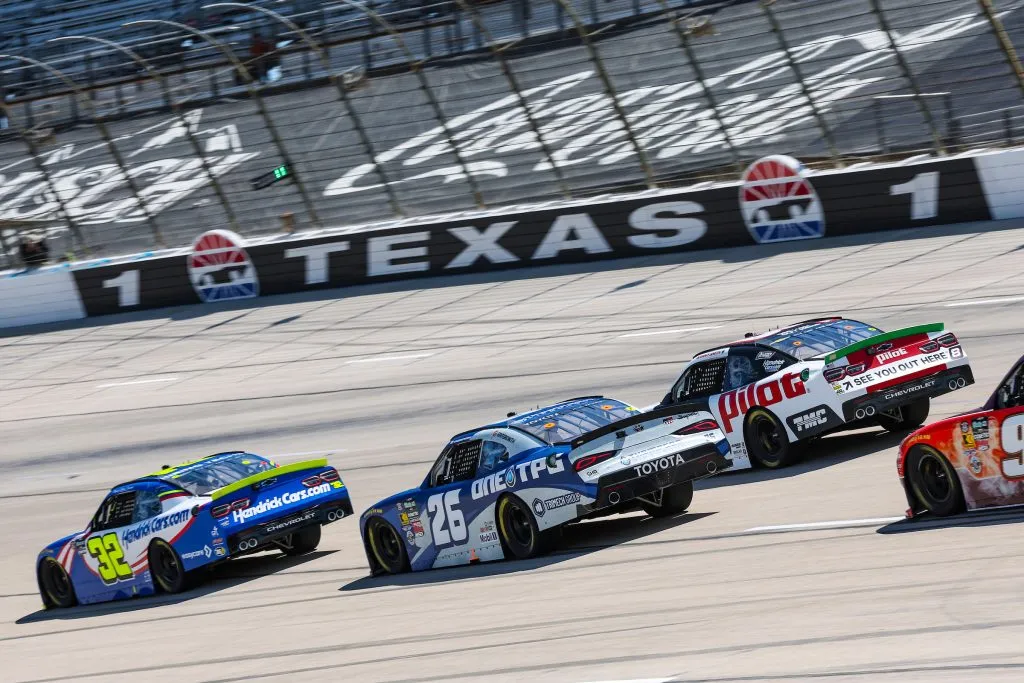
How Sam Hunt Racing Gained Time, Control, and Performance Through In‑House Metrology
A young and punchy NASCAR team builds engineering independence and protects on‑track performance with TriMech and ZEISS.
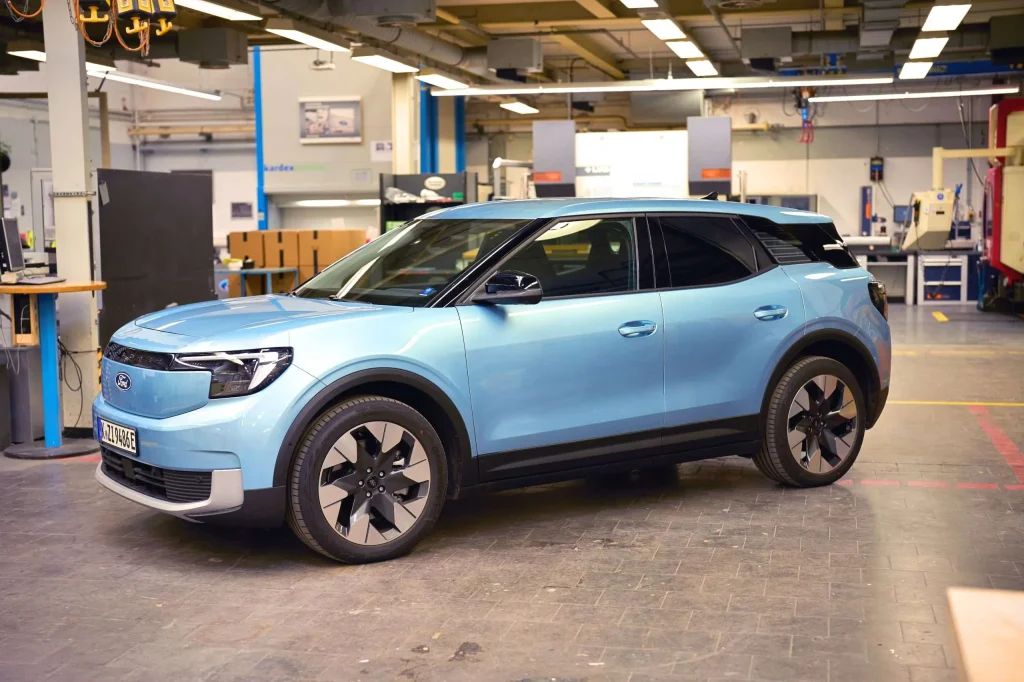
How Ford Developed the New Explorer Using Formlabs SLA and SLS 3D Printers
Learn how Ford integrated high-speed, in-house 3D printing to reduce prototyping times from days to minutes, allowing for rapid validation of complex designs for the...

How Subaru used 3D printing to cut tooling development time by 50%
Learn how Subaru of America’s Accessories Product Development team replaced expensive, outsourced tooling with in-house 3D printing, utilizing the Stratasys F770 to reduce costs by...