





The Cost and Time Benefit of Support Free 3D Printing from TriMech Services

3D Printing without supports offers a number of advantages in situations where part geometry allows for it. When possible, TriMech’s support free 3D printing service has the opportunity to simplify print preparation, reduce material usage, reduce post processing labor and increase throughput.
Support structures can take time and iteration to get just right. By printing parts directly on the build plate, this time can be eliminated from the pre-print and print qualification process. In addition to time required for generation and validation, supports use valuable material. While most support structures typically represent a small fraction of the volume of the finished parts, this volume is not always negligible. For serial production, material saving from the elimination of supports can be a meaningful cost saving.

Support free 3D printing
Support free 3D printing reduced labor
Most importantly, 3D printing support free can drastically reduce the post processing labor required. Parts printed on supports need to be removed from these supports during the cleaning process. This step can be time consuming depending on the support styles used. Even for easily-removed supports, this time can add up quickly when printing large production runs. Supports also leave witness marks which may need to be manually finished in the post processing stage.
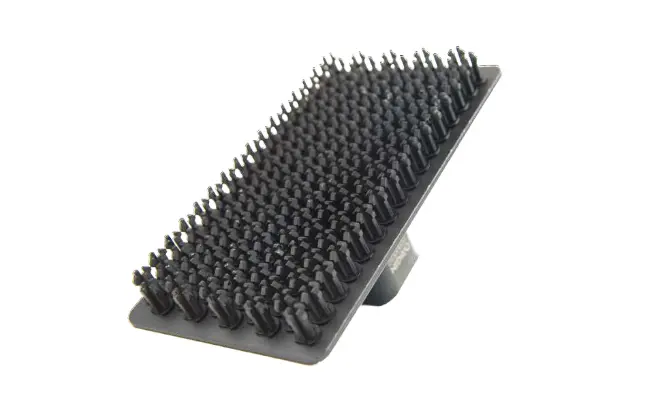
Support free part
For low volumes this manual labor may not be significant, but when part counts climb into the 100’s and 1000’s this labor often becomes the primary driver of part costs. With support-free parts, you are able to eliminate these manual post processing steps, and get the most value out of batch production and post processing. As a result of these time and labor savings, cost can be reduced and throughput can be increased.
Support free 3D printing parts will fall into one of three categories:
- Suitable for support free 3D printing without modification
- Possible to print support free with minor modification
- Unsuitable for support free printing
For support free 3D printing, there are some fundamental properties a part must have:
- The part needs to feature a flat face which can be placed directly on the build plate.
- The part must not have any islands or otherwise unprintable features, such as long flat overhangs, when this face is placed directly on the build head.
If both of these criteria are satisfied the next step is to check if any unvented volumes are created by this orientation. If a part meets all three criteria it is generally well suited to unsupported printing without modification.
Download the white paper to learn more about how the design of your parts can facilitate support free 3D printing, and learn more about our Stratasys Origin P3 3D Printing Service.
Need a Quote for Advanced Manufacturing?
Contact a TriMech manufacturing expert today and get answers to your questions
Related Content
More 3D printing and manufacturing content from the TriMech team
Stratasys Solution Guide: How 3D Printing of Drones and UAV’s Meet Commercial and Defense Manufacturing Challenges
Additive manufacturing is playing a key role in the development and production of drones with tangible benefits over conventional manufacturing methods. With the capability to rapidly create prototypes and end-use parts, 3D printing gives drone…
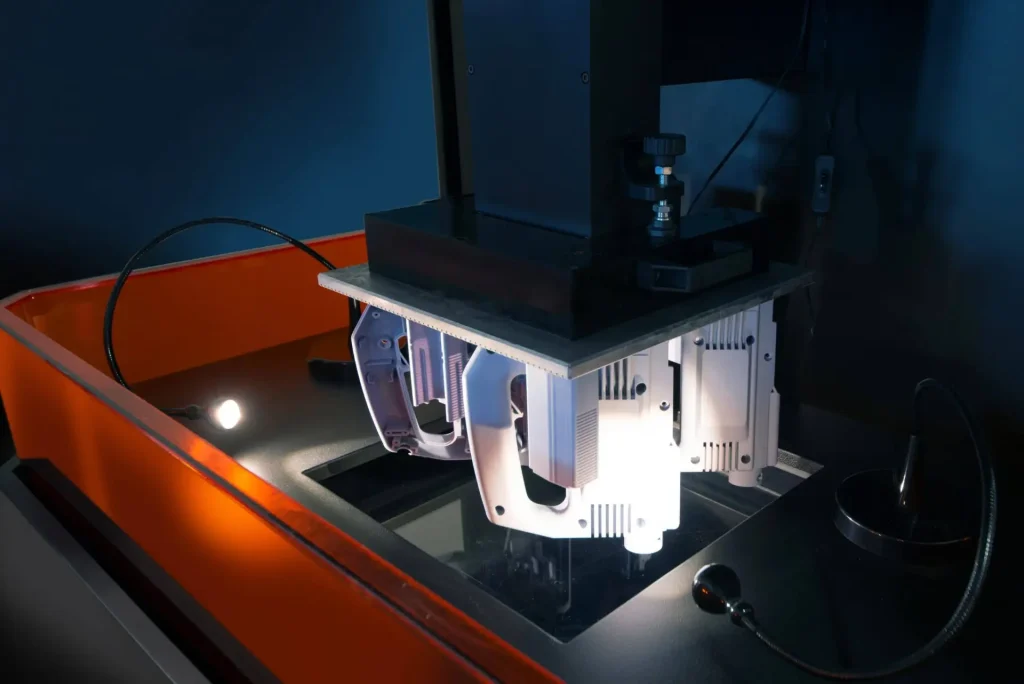
3D Printing Post Processing Survey Trends Report 2026
3D Printing Post-processing is where additive manufacturing either delivers or falls short. This year's trends report from PostProcess® Technologies shows exactly where the industry stands and where it's heading.
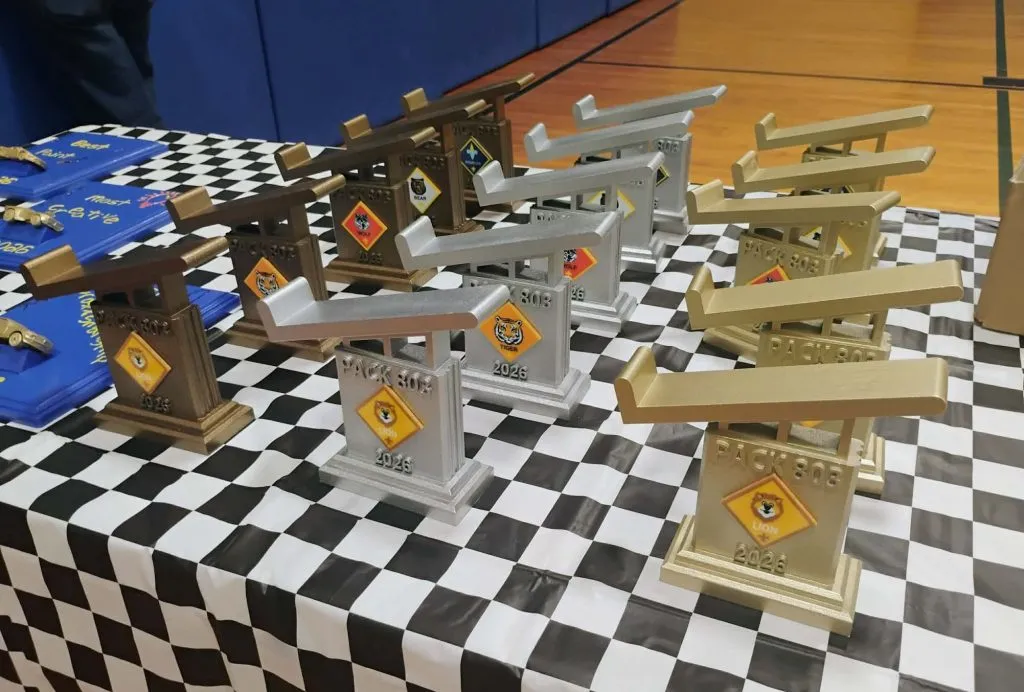
Custom 3D Printed Trophy Production for a Scout Pinewood Derby Event
A Pinewood Derby Project That Started with One Simple Question: Where Do I Begin to create a Custom 3D Printed Trophy? One of the things I enjoy about working at TriMech is getting to help…