





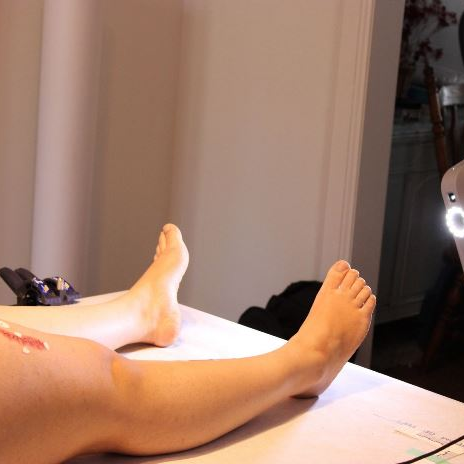
How 3D Scanning is Used as a Forensic Method
3D scanning may be just what they need to change the outcome as one of the most powerful forensic methods.
Related Topics
Solutions featured in this Case Study
 3D Scanners
 Digital Manufacturing Solutions
Forensic teams have been documenting crime scenes with cameras for decades. They also use approximate measurement methods, such as a tape measure, that can only be performed at the crime scene. The 2D images that cameras generate, even with the highest quality, lack crucial data that only spatial relations between objects can create. These parameters can be of such critical value that they may determine whether the criminal justice system ends up prosecuting an innocent person and vindicating the offender.
3D scanning may be just what they need to change the outcome as one of the most powerful forensic methods.
3D Scanning as a Forensic Method
The traditional method of researching a crime, with inaccurate tape measurements and 2D photos is time-consuming. These measurements can only be taken one time at the crime scene. If anything is missed, you are not able to go back and get it. Using a 3D scanner, you have a complete 3D digital copy of the crime scene. You are able to accurately measure the details from the crime scene.
Compared to traditional forensic methods, 3D scanning is leading the way with:
Structured light technology
3D scanning combines 3D imaging technology and structured light with images of colors and textures. This creates a 3D image for an area with actual size and depth. It allows people to interrogate data for details and gather accurate geometric information from the crime scene that can be used later.
This technology uses structured light which is a grid projected onto an object using white light. This creates the data for the 3D point cloud and uses the focal length between cameras to calculate the grid points. Then, the scanner combines that technology with colors and textures of the actual scene being scanned.
Portability and ease of use
Designed for handheld operation, Artec 3D scanners are ideal for fieldwork, allowing investigators to quickly and thoroughly document crime scenes.

Comprehensive Data Capture
Unlike traditional methods—limited by tape measures and 2D photos—3D scanning ensures that every detail is preserved. Investigators can revisit the digital scene, take new measurements, and analyze evidence from any angle, eliminating the risk of missing crucial information.

Scanning software can help record measurements of injuries and curvatures. The computer displayed 3D data, which can adjust viewing angles and orientations.
Superior color accuracy
3D scanners obtain, firstly, high-quality color – an element in forensic pathology that can reveal much beyond the identity of the victims’ body modifications. In fact, color can shed light on the varying condition of the body providing investigators with a richer spectrum of forensic data.
For example, the degree of coloring of traces of bodily trauma, including bruises and wounds, may convey the severity of the injury and its progression.
More generally, skin discoloration can reflect the body’s stage of decomposition. Add environmental factors to the picture, like the setting of the body’s discovery and weather, and color can act as a timestamp which could be the key piece of the puzzle.
With 3D scanning, forensic pathologists that are new to a case can simply open the image files, manipulate and examine them from various angles, and acquaint themselves with the visual evidence much more quickly than sifting through piles of pictures or swiping across a gallery of disconnected images.
In other words, the difficulty of having to recreate the crime scene is virtually eliminated with 3D scanning.
Recover Criminal Justice
The use of 3D scanning in conjunction with 3D printing has allowed for the reconstruction of crime scenes and can bring even the minutest details back to life.
One of our clients, HD Forensics is a great example.
Traditionally, they were handed a pile of bones to examine and would have to go to the crime location to try and gather as much detail as possible. This left the opportunity for mistakes and the possibility for the crime scene to be corrupted over time.
Although they could process the crime scenes using images and a written description, HD Forensics knew there had to be a better way to capture the details needed, so they started looking at 3D scanners.
After exhaustive research, they purchased an Artec Spider from TriMech. This would allow highly detailed scans of crime scenes and bones for a catalog to help forensic anthropologists across the world.
Criminal Justice Education
Mercyhurst University in Pennsylvania has partnered with HD Forensics to incorporate forensics training to students and professionals involved in the recovery and processing of human remains. They host a variety of courses throughout the year that focus on analyzing accident sites to gather as many details as possible to solve potential criminal cases.
Universities and colleges with criminal justice programs are embracing 3D scanning since it allows for a faster crime scene investigation process while creating an accurate three-dimensional representation. Non-contact 3D scanning is imperative for both police and insurance companies. This technology can take measurements, inspect evidence and analyze blood spatter or bullet trajectory.
Watch this webinar to find out how universities and colleges are teaching their students to adopting 3D scanners for critical work at crime scenes:
Case Study: The Ohio State University
In 2015, the Ohio State University started the Digital Union Free 3D Printing Program, through which students and staff from any department could have free access to 3D printing. In 2016, the Attorney General at the Ohio Bureau of Criminal Investigation (CBI) partnered with the program to identify the remains of a Jane Doe, found earlier in that year.

Traditionally, facial reconstruction is done by applying clay on top of the skeletal remains, but this can damage DNA evidence. To preserve the evidence for this case, Samantha Molnar, a forensic artist in the Police Department, contacted the university’s program to 3D print the skull and then proceeded with the facial reconstruction.
“The remains are considered the evidence, and we are sensitive to handling or building upon them because they were part of a living person at one time. 3D printing is a great tool for reconstruction because it preserves the original skull while still providing the form I need to complete an accurate reconstruction,” said Samantha Molnar.
One of the program students used the CT scan of the skull to create a 3D CAD file and then 3D print the skull. Once the model was fleshed out with clay, images were released to the public and provided for quick identification of the victim.
Case Study: Michigan State University
In the summer of 2016, the local police contacted a team specializing in biometrics at Michigan State University, led by distinguished professor Anil Jain, to unlock a deceased victim’s phone to investigate his murder further. Professor Jain and his PhD student, Sunpreet Aror put their research to the test and tried to use 2D printed fingerprint replicas to unlock the murder victim’s phone.
Human skin is conductive, and scanning devices pick up the bits of electricity produced by the fingerprints. 2D targets are not adequate to simulate how users interact with the reader during the fingerprint capture process. As a first test, the team coated the 2D prints in a special conductive paper and they realized that it was challenging for scanning devices to read them. They decided to expand their research and created a 3D target in the form of a 3D printed hand that could be worn to mimic the fingerprint capture process.

The hand’s 3D design was divided into six parts: four individual fingers, the thumb and the remaining middle portion of the hand. Through a 3D software, they embedded the 2D fingerprint characteristics into the 3D design of the hand. Professor Jain and his team then used the PolyJet printer, which slices the parts into 2D horizontal layers and prints them layer by layer. They used opaque and translucent rubber-like materials like TangoPlus, which can simulate human tissue and provide the same feel as a human hand. In addition to creating this human-like texture, these materials are also appropriate for imaging with optical readers.
“Like any optical device, fingerprint and hand scanners need to be calibrated, but currently there is no standard method for calibrating them,” said Jain. “This is the first time a whole hand 3D target has been created to calibrate fingerprint scanners.” The experiment was successful, and they were able to unlock the victim’s phone. Professor Jain received a Civilian Citation “for meritorious actions which significantly aided in the protection of life,” and the MSUPD presented him the Meritorious Service Award.
Conclusion
3D scanning has emerged as a transformative tool in modern forensic investigations, offering precision, objectivity, and efficiency. From documenting crimes scenes to reconstructing accidents and analyzing evidence with high accuracy, 3D scanning technology enhances the defensibility of forensic evidence. For investigators, legal teams, and forensic scientists, adopting 3D scanning is not just a technical advancement, it can be a strategic advantage.
Related TriMech Solution
Learn more about the solutions featured in this Case Study:
More Case Studies and News Stories
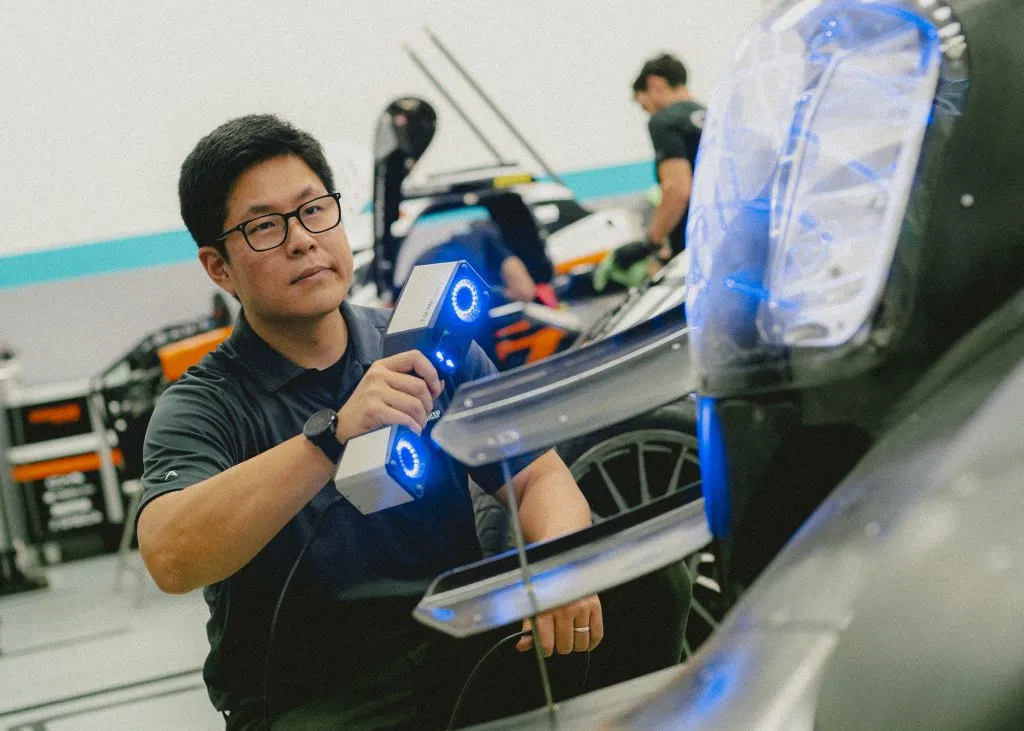
Accelerating Race Ready Engineering Through Digital Twins and Advanced Manufacturing
How Capone Motorsports cut design cycles in half and unlocked new performance potential.

How Sam Hunt Racing Gained Time, Control, and Performance Through In‑House Metrology
A young and punchy NASCAR team builds engineering independence and protects on‑track performance with TriMech and ZEISS.

TriMech Group Named Official Technology Partner of Sam Hunt Racing
Sam Hunt Racing (SHR) announces today that TriMech Group, a leading technology and business solutions partner for designers, engineers, and manufacturers, joins Sam Hunt Racing...