





How 3D Scanning is Used for Heritage Preservation
3D scanning and 3D printing are impacting the world of historical and heritage preservation. Whether it is scanning a city center or documenting the details of an extinct civilization, 3D scanning is making the ancient world accessible in ways we never before imagined.
Related Topics
Solutions featured in this Case Study
 3D Printers
 3D Printing Materials
 3D Scanners
 Digital Manufacturing Solutions
 Make Your Products
3D scanning and 3D printing are impacting the world of historical and heritage preservation. Whether it is scanning a city center or documenting the details of an extinct civilization, 3D scanning is making the ancient world accessible in ways we never before imagined. This is relevant now more than ever to researchers, as the artifacts they typically must examine are quite old, and in many cases extremely fragile. Thanks to 3D scanning, these objects and many more can be accurately documented with no risk to the original artifact.
Case Study: University of Notre Dame
Digital Historical Architectural Research and Material Analysis (D.H.A.R.M.A) is a research team based at the University of Notre Dame School of Architecture.
This team is tasked with documenting various historic buildings and monuments around the world, and in turn uses the models created from this data to aid in the preservation and reconstruction of historical architecture. Further plans for the scanning process include scanning historic buildings listed in the U.S. National Register of Historic Places.
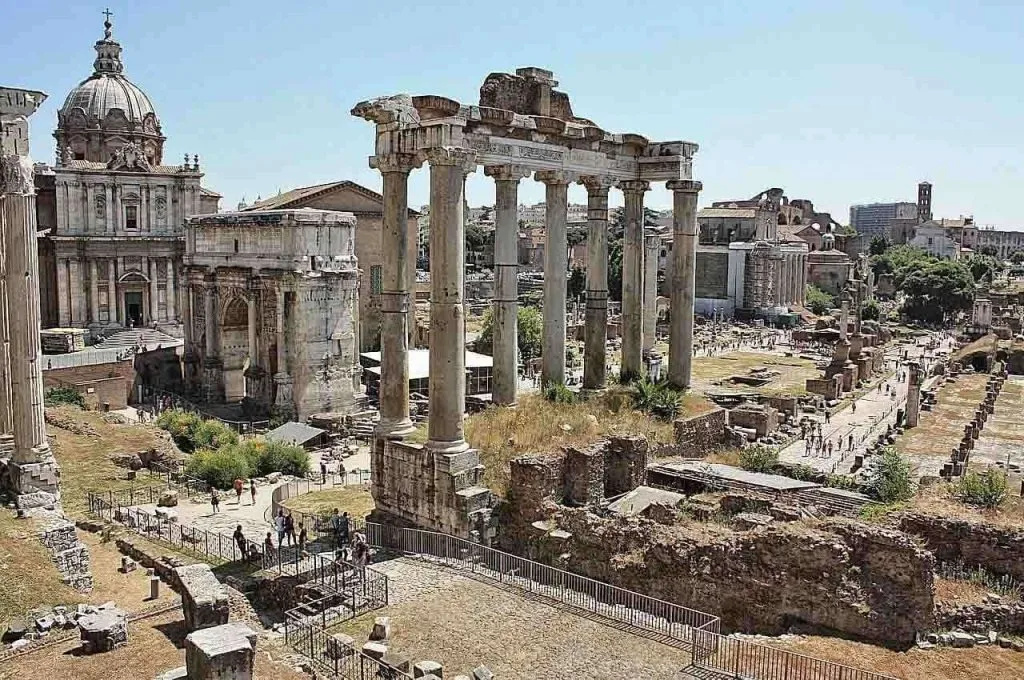
Roman Forum
The team has additionally used 3D scanning and 3D printing at sites around the world, scanning the Taj Mahal in India and the Roman Forum. The data gathered in these scans has been invaluable for aiding in the preservation and reconstruction of these sites.
Case Study: Google Maya Project
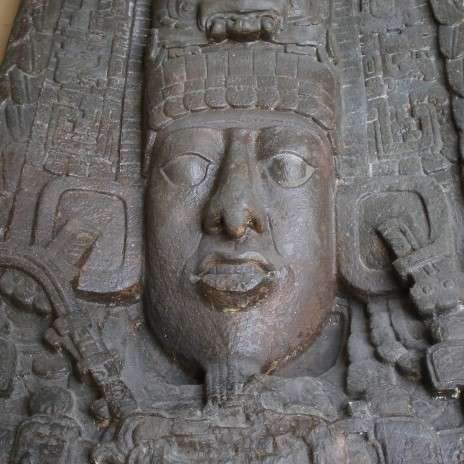
Back in the 19th century, a British expedition led by Alfred Maudslay documented much of the ancient architecture by creating giant true-to-scale plaster casts.
As a reference to the amount of work involved it was stated that “A regular monument required anywhere from 600-1000 individual segments of plaster that later had to be pieced together to create the final molds that were shipped back to England.”
These were essentially ‘negatives’ of the monuments, capturing all their characteristics in plaster or papier-mâché. Then, back in England, the ‘positive’ casts we have today were created from these same molds. These casts are highly-accurate replicas of the original monuments themselves, which makes them perfect for historical purposes. This is a huge investment in time and after years in a museum the original casts and molds are fragile and irreplaceable.


Fast forward to the 21st century where the Google Maya Project comes into play. The very foundation of the project demanded the creation of incredibly lifelike, historically accurate 3D models of these casts.
The British Museum’s curator, Claudia Zehrt, initially wanted to use photogrammetry for documentation as it has a track record for being used in this capacity. However, due to the large nature of the casts and their positions within the storage racks, it soon became clear there would not be enough room to shoot all the various angles needed for photogrammetry.


Due to its versatility in scanning medium and large-scale objects in full-color, the project’s team opted to use the Artec Eva handheld 3D scanner. Zehrt was quickly up to speed with the scanner’s use and was impressed with the ability to capture details in the most cramped of conditions.
She goes on to explain her scanning process, “On average it took about 10 minutes to scan each cast. Small casts were faster, while some of the big ones required 20 minutes or more. It also depended on how deep and narrow their carvings are, since this makes it harder for the scanner to pick up those difficult-to-access surfaces. And if there had been more space between the casts, it would’ve been easier and faster. The 11-15 inches that I had certainly slowed things down. If the casts would’ve been free-standing, with no obstructions, I could’ve easily scanned them in half the time.”
In addition to the various monuments that were documented with the Eva, it was also used to capture the details of a hieroglyphic staircase. This portion of the project focused on creating an exact CNC-milled replica to be used for display alongside the original. The original casts for the stairway presented Zehrt with some challenges regarding scanning.

3D Scan of Mayan ruin staircase
She explains, “The stairway consists of 12 casts, all of which were 3D scanned with Eva, which went smoothly and quickly. But because one of the casts was broken and some of the detail was missing, we needed to refer back to Maudslay’s original drawings and photographs of that step to recreate it digitally in its entirety. And we succeeded.”
A 3D model was generated from the scans and was sent to be milled from Ancaster Limestone, a Middle Jurassic oolitic limestone quite like the limestone the Maya used for the original stairway. Following the milling process the replica was sent to be displayed alongside the original in Palenque.
“We are just at the beginning of seeing what we can do with 3D scanners and the remarkable models they can create of priceless cultural heritage around the world. Beyond the research benefits of 3D scanning, as well as the incredible possibilities we’re seeing with turning these objects into VR exhibits, there’s something equally if not more important. That’s using this technology to return these treasures back to the people, to the cultures that created them. Today, using a handheld 3D scanner like Artec Eva, I can digitally capture in minutes almost anything on display in a museum or even onsite at an archaeological excavation.”
Case Study: Google Arts & Culture
Through the Google Art Project, now known as Google Arts & Culture, teams were tasked with capturing and digitizing tens of thousands of pieces of artwork from around the world. The goal was to create full-color, high-resolution 3D models of a range of pieces and make them available to museums around the globe.

Google chose to use the Artec Eva in the creation of its online galleries, which includes over 90,000 digitized works from over 500 museums worldwide. The Artec Eva was integrated into a custom-made setup to create textured, high-resolution 3D models of over 200 artifacts, such as vessels, statuettes and pottery.
Through each of these museums in the Google Art Project library, users can see everything from animal skulls to ancient human masks and statues. Funerary objects, models, carvings and priceless artifacts of many types are also included. You can select the artwork you want to explore and with your mouse, turn around to get a 360 view of the 3D image.
Case Study: Open Heritage Project
Unpredictable catastrophic events, erosion, climate change or human actions threaten valuable landmarks, sites and objects. Although disasters can’t be prevented, technology can always secure that there are blueprints and backup replicas for generations to examine.
Google Arts and Culture is expanding its Open Heritage Project by helping preserve the world’s most historic sites using 3D technology.

Two temples at the site of Bagan in Myanmar
CyArk, a non-profit organization, and Stratasys teamed up with Google to create a virtual reality portal that everyone has access to. Their mission is to make 3D cultural heritage data open and accessible to teachers, scholars or anyone interested. This project enables everyone to be able to explore and have access to landmarks, monuments and other items right at their fingertips.
CyArk, Stratasys and Google have set out on several expeditions to document the Mayan ruins, temples in Myanmar and even to the cathedral of Notre Dame.
They have partnered with 1,500 museums from over 70 countries to help preserve the art. Many relics are housed in these facilities which then were lasered to virtually be viewed by a wider audience either on a mobile device or virtual reality headset. The growing demand for 3D technology combines high levels of accuracy and realism to keep the culture of the world preserved.
Related TriMech Solution
Learn more about the solutions featured in this Case Study:
More Case Studies and News Stories
Accelerating Race Ready Engineering Through Digital Twins and Advanced Manufacturing
How Capone Motorsports cut design cycles in half and unlocked new performance potential.

How Sam Hunt Racing Gained Time, Control, and Performance Through In‑House Metrology
A young and punchy NASCAR team builds engineering independence and protects on‑track performance with TriMech and ZEISS.
Get Affordable, High-Performance Metal Parts Quickly Using TriMech’s Cold Metal Fusion Service
TriMech now offers Cold Metal Fusion, a faster and more affordable 3D printing service for creating high-performance metal parts that outperform traditional machining and casting.