






3D Printing Concept Models In-house Reduces Production Times
Doosan Infracore is a global leader in the production of heavy duty excavation equipment. Learn why they are now 3D printing concept models in-house.
Related Topics
Solutions featured in this Case Study
 3D Printers
 3D Printing Materials
 Digital Manufacturing Solutions
 Make Your Products
 Manufacturing Services
 Manufacturing Software
Doosan Infracore is a global leader in the production of heavy duty, best-of-breed excavation equipment. Until recently, the company created prototype models using CNC and silicon molds, or it would outsource its concept modeling to a service provider. Outsourcing was slow, however, and the resulting models were not printed in fine enough detail.
Doosan Infracore installed the Objet Eden260VS 3D Printer in-house at its design headquarters because of the printer’s ease of use and speed. Doosan Infracore saw immediate benefits from the printer’s ability to produce fully cured concept models more quickly – no matter how complex the design. The result radically decreased production costs and times, and increased creativity.
“Concept modeling before we had the Objet Eden260VS 3D Printer was a lengthy and wasteful process,” says Yoonkwan Park, senior designer. “After design, the project went to manufacturing, and then it took a few months until the complete concept model was ready. This was expensive, and I was always concerned about exposing our cutting-edge designs to a third party.”
“The Eden 3D printer is the perfect solution for preparing concept models in our industry. It is useful for a multitude of applications such as dyeing and chrome coating. It is also good at silicon molding because of its fine surface detailing. This further increases its value.”
Park also praises the Eden 3D Printer for its ability to provide fine detail and deliver quality post-processing, qualities that other rapid prototyping machines lack.
Award-Winning Designs
Doosan Infracore integrated the 3D printer into its production processes and uses this machine to print concept models and cure parts.Recently, Doosan Infracore won a commendation in one of the world’s most prestigious design competitions. The 2009 Red Dot Competition attracted more than 2,733 entries, of which only 15 received a “best of the best” commendation. Doosan Infracore’s award-winning model, built on the Objet Eden 3D Printer, was the CX Eco Transformer, an innovative excavator scheduled for release in 2018. The CX Eco Transformer was chosen by Red Dot for its ecological soundness, safety, usability and efficiency.

Doosan built a model that won a Red Dot Best of the Best award
In order to take part in the Red Dot Design Award, Doosan Infracore prepared a concept model using the Objet Eden260VS Printer and Rigid Opaque material. This robust material offers a wide range of mechanical properties, including the ability to withstand bending. It has good impact strength and high contrast between the model and support materials. In addition, the surfaces enhance visualization of details and edges. The company had only a very short lead time, and Park says that without the Eden 3D Printer, “I do not think we could have met the lead time on this project. Our processes are so much faster and simpler now.”
Related TriMech Solution
Learn more about the solutions featured in this Case Study:
More Case Studies and News Stories
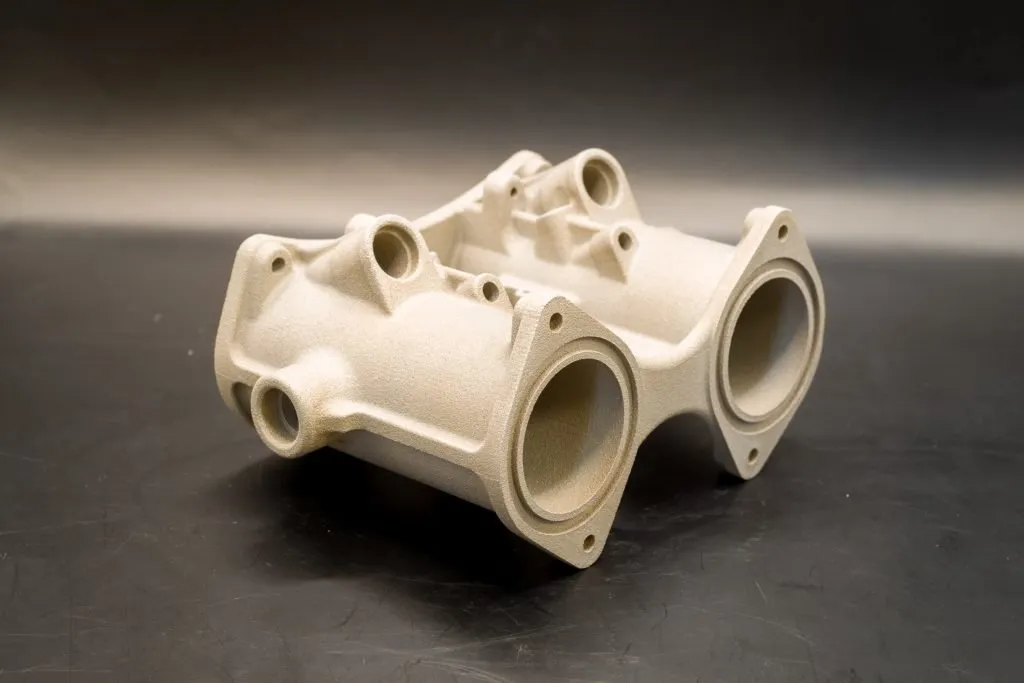
Get Affordable, High-Performance Metal Parts Quickly Using TriMech’s Cold Metal Fusion Service
TriMech now offers Cold Metal Fusion, a faster and more affordable 3D printing service for creating high-performance metal parts that outperform traditional machining and casting.
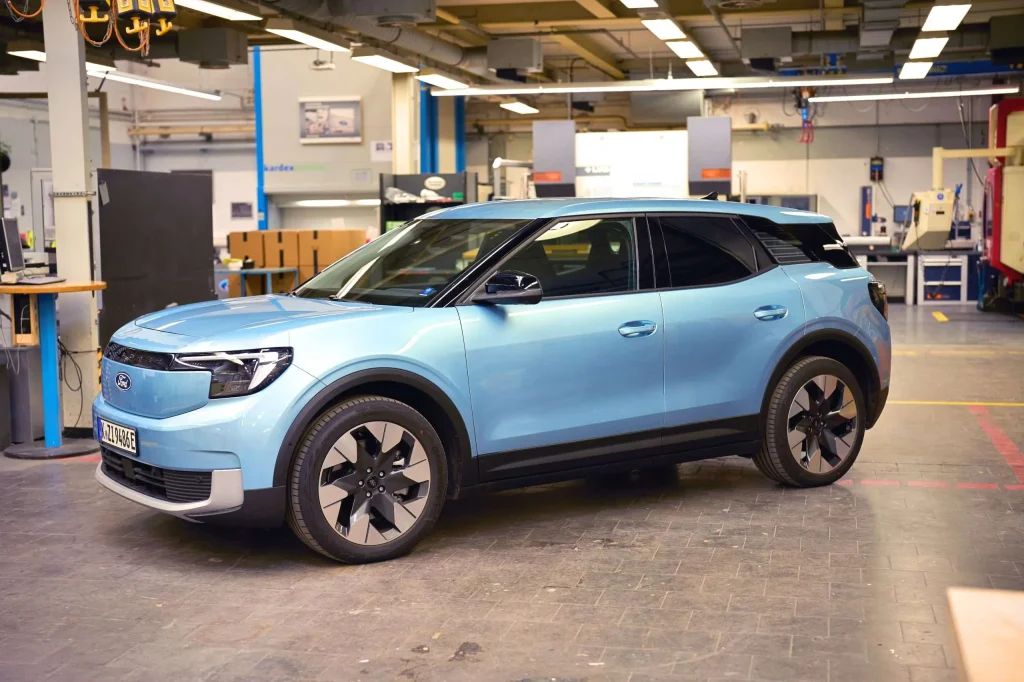
How Ford Developed the New Explorer Using Formlabs SLA and SLS 3D Printers
Learn how Ford integrated high-speed, in-house 3D printing to reduce prototyping times from days to minutes, allowing for rapid validation of complex designs for the...

How Subaru used 3D printing to cut tooling development time by 50%
Learn how Subaru of America’s Accessories Product Development team replaced expensive, outsourced tooling with in-house 3D printing, utilizing the Stratasys F770 to reduce costs by...