






Form, Fit and Function Testing with a PolyJet 3D Printer
Peltor uses a PolyJet 3D printer to produce accurate, attractive prototypes to validate the form, fit and function of their products prior to production.
Related Topics
Solutions featured in this Case Study
 3D Printers
 3D Printing Materials
 Digital Manufacturing Solutions
 Make Your Products
 Manufacturing Services
 Manufacturing Software
Peltor uses a PolyJet 3D Printer to produce accurate, attractive prototypes to validate the form, fit and function of their products prior to production.
With more than 50 years of experience in developing and manufacturing hearing protectors, Peltor AB offers a wide range of products that are at the forefront of safety, comfort and aesthetics. Its line includes communication devices such as headphones and mouthpieces, safety glasses, hardhats and visors. The company’s clients include the military and the manufacturing, aviation, forestry, agriculture and motor sports industries.

Form fit function testing
Peltor provides complete solutions that address the unique needs of each individual in an aesthetic way. During product development, Peltor focuses on both function and aesthetics to create comfortable and attractive communications and protection solutions.Creating well-designed head and face protectors and communication devices requires testing with prototype materials that mimic the materials used in the final design. This ensures that functional testing returns accurate results.
Form and Fit Testing
Peltor depends on a 3D printer to create attractive, accurate prototypes that function realistically and enable designers to see and touch the final product before production. Peltor uses Rigid Opaque material to simulate ABS, the material Peltor uses for some of its final products. This allows Peltor to perform accurate fit and form tests of its products before production.

Peltor ear defenders
Peltor used the Objet30 Pro to create a prototype of a headpiece used for hearing protection and then compared the performance of the prototype to the final product. Peltor found that there is little difference between the end product made from ABS material and the prototype printed on the Objet30 Pro for its testing purposes.
Peltor had previously tried other prototyping techniques such as selective laser sintering (SLS), but they did not meet the company’s needs. Often, the problem was that the prototype did not look like the real product. The Objet30 Pro prints high-resolution models that can be painted directly after printing to look exactly like the final product, solving the look and feel replication problem.
Saving Time and Money
Originally Peltor’s prototypes were produced by service bureaus, which made each design iteration a slow and laborious process. With the in-house 3D printer prototypes can be produced much faster. Timely feedback from the prototypes makes it possible to confirm and implement changes in a fraction of the time required in the past. Producing models in-house also saves the considerable costs of outsourcing.
“The Objet30 Pro helps Peltor with the difficult job of adapting hearing productors to the human head,” said Henric Hansson, mechanical designer for Peltor. “In many cases, we can reduce the time required for a design iteration from weeks buying prototypes outside to days with an in-house Objet30 Pro. Peltor will not sell any product with known quality problems so finding problems with the prototype early in the process is perfect.”
Related TriMech Solution
Learn more about the solutions featured in this Case Study:
More Case Studies and News Stories
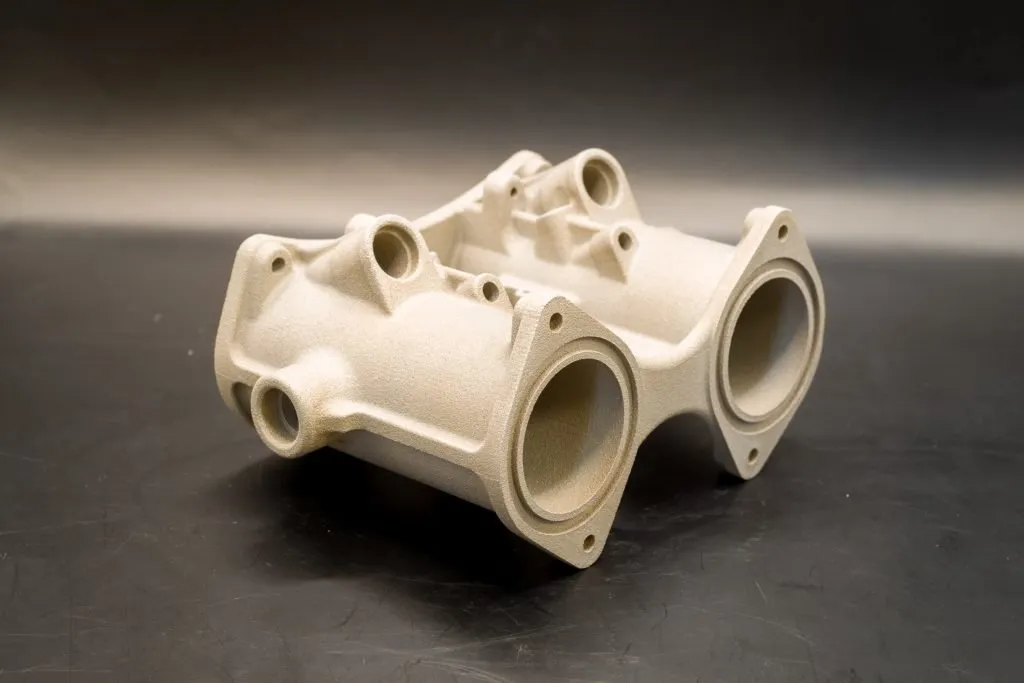
Get Affordable, High-Performance Metal Parts Quickly Using TriMech’s Cold Metal Fusion Service
TriMech now offers Cold Metal Fusion, a faster and more affordable 3D printing service for creating high-performance metal parts that outperform traditional machining and casting.

How Ford Developed the New Explorer Using Formlabs SLA and SLS 3D Printers
Learn how Ford integrated high-speed, in-house 3D printing to reduce prototyping times from days to minutes, allowing for rapid validation of complex designs for the...

How Subaru used 3D printing to cut tooling development time by 50%
Learn how Subaru of America’s Accessories Product Development team replaced expensive, outsourced tooling with in-house 3D printing, utilizing the Stratasys F770 to reduce costs by...