




Medical 3D Printing: How 3D Printing is Used in the Medical Field

In the medical field, traditional manufacturing processes and materials often create physical and financial barriers to implementing some promising applications. 3D printing emerges to overcome these hurdles, from creating realistic anatomical models to producing all kinds of medical equipment and supplies.
This article gives a comprehensive overview of how medical 3D printing is transforming prototyping, production, and education in healthcare, along with a look at some of the trending materials used in the field.
Medical Devices
From rapid prototyping for R&D to patient-specific medical devices such as prosthetics and orthotics, or to manufacturing batches of medical supplies, 3D printing applies to a wide range of scenarios due to its speed, affordability, and design freedom.
Applications of 3D Printing for Medical Devices
Everything from blood sugar monitors to organ transfer equipment go through hundreds of revisions and rigorous testing before being put out in the field. In the medical equipment industry, there is a growing need to rapidly produce prototypes that can withstand functional testing as well as have a good fit and finish to better help in the design validation process. 3D printing technologies have significantly transformed every stage of medical product development.
Research & Development
Medical device manufacturers are always striving to shorten product development cycles while reducing risk and cost. Through additive manufacturing services or in-house 3D printing technologies, users can achieve rapid research feedback through rapid iterations, while also ensuring the security of proprietary design information. Rather than taking several weeks to produce a final device, 3D printers allow rapid product development in just hours.

Preclinical Testing
Finding a testing model that simulates the pathology needed for testing is a challenge for medical device manufacturers. During the preclinical testing phase, 3D printers can be used to make realistic and custom models using real patient anatomy and conduct tests in any environment. 3D printers play a great part in designing more clinically relevant validation models and enhancing product development. 3D printing may also be used for preclinical testing of medical devices, by allowing users to create prototypes or short-run production using ISO certified materials that provide equivalent performance to their traditional counterparts.
Manufacturing & Production
Additive manufacturing is a great alternative to traditional manufacturing methods for low-medium volume. Having a 3D printer in-house allows hospitals to eliminate expensive tooling for parts that don’t need injection molding and protect confidential client data. They produce organic, complex geometries that otherwise couldn’t be manufactured. Clinical trials and pilot commercial launches can create fit-for-purpose tools, jigs, and fixtures for up to 30-50% of the cost and 90% faster than outsourcing.
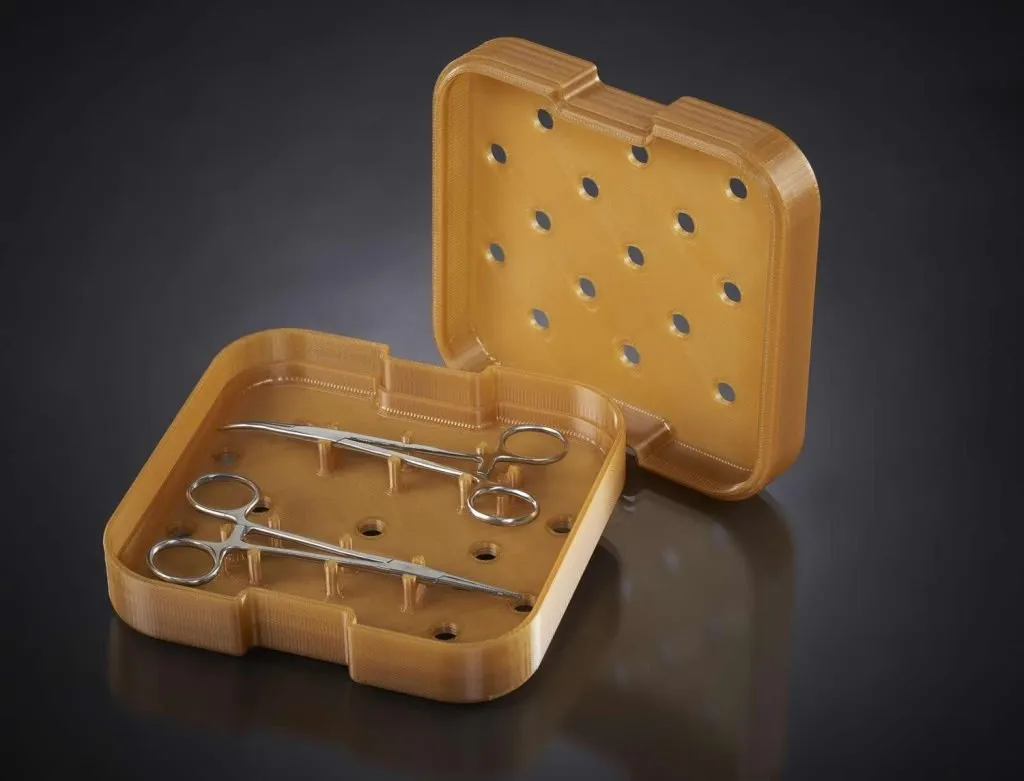
ULTEM 1010 medical part
During the 2020 pandemic, personal protection equipment (PPE) was in short supply with disrupted material. With one Origin P3 3D printer running three shifts a day, 800 swabs were created every day, for a total of over half a million in just under eight weeks. The nasal swabs were designed with an open lattice structure at the top to capture specimens for testing. Product development, geometrical boundaries, and iterations were achieved quickly in medical grade resin.
If you are interested in how 3D printing is used in the medical device industry, check out this medical device manufacturer guide.
Custom Prosthetics, Orthotics, Wearables
Traditionally, prosthetics consist of casting anatomy and then manually making molds, which is a labor-intensive and expensive process that requires long lead times. This poses a challenge for patients, especially younger children, because they quickly outgrow their customized prosthetics. In orthotics, there are also many cases where patients don’t suffer limb loss but still have limited mobility of an existing limb due to trauma or a medical condition. Digital workflows yield several advantages over traditional prosthetics and orthotics methods.
There are many cases where 3D printing was used to produce custom orthotics and prosthetics to help increase the mobility and functionality. More extensively, 3D printing changes the go to market game of many brands. Go Orthotics, an orthotics manufacturer, switched to H350™ SAF™ technology and the high yield, bio-based PA11 material for more design freedom and faster production, raising the bar of custom orthotics.
3D Printing Materials for Medical Devices
When choosing the right material for medical devices, biocompatibility is a primary factor to consider in addition to mechanical properties.
As a biocompatible and sterilizable material with good mechanical properties (lightweight and chemical resistant), Nylon PA12 is well used in SLS printing for medical tools and prosthetics.
Check out this Biocompatible Material Guide if you want to learn more about biocompatible materials that could be used for 3D printing in the medical field. Some of the biocompatible materials are also explained in our Dental Materials Guide.
Medical Models
Multi-material medical models are emerging as an important tool for education and training, and even more popular for pre-surgical planning and practicing operations.
Applications of 3D Printing for Medical Models
Physician Education & Clinical Training
Traditionally, clinical training uses animals or cadavers for testing. A cadaver is a deceased body (usually human or pig) that is used to test various types of surgical and medical devices. Not only is the ethics of cadaver testing a concern, but there is a huge cost to obtain, store, and dispose of them correctly. Both of these options come with limitations because they only have approximate anatomy or pathology, are difficult to obtain, or are expensive.
The realism and functionality achieved with 3D printing technology can eliminate the need for them. These 3D printers for medical use can provide more accurate training on patient-specific anatomy as well as simulate tissue properties and blood flow.
Pre-surgical Planning & Practicing
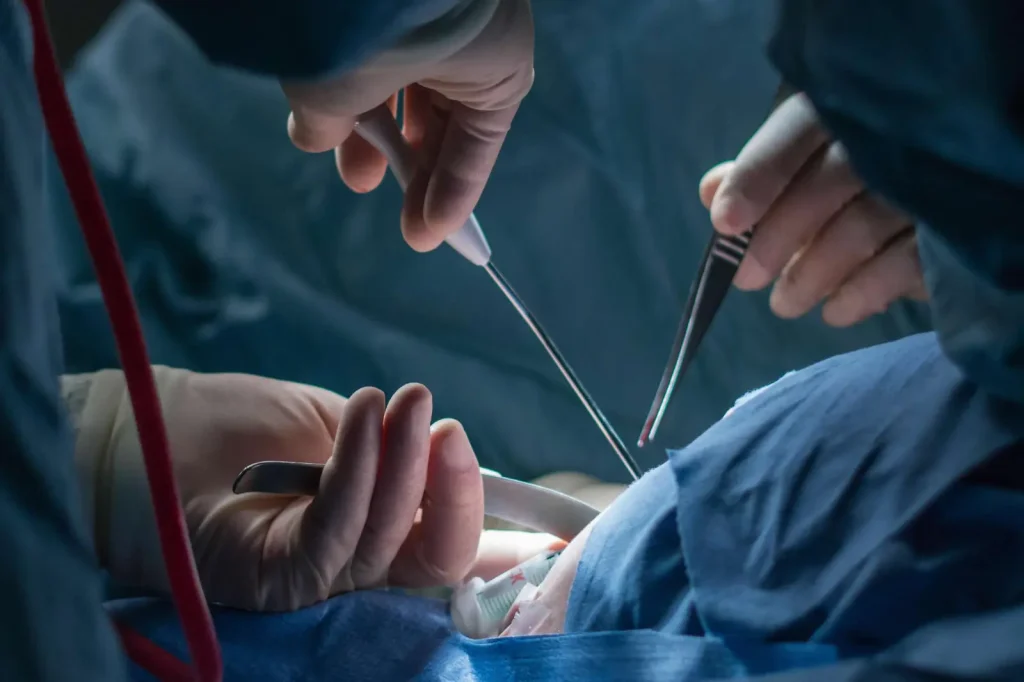
Hospitals face challenges when determining which surgical approaches are the best fit for patients because different products and procedures work better for different anatomy and pathology. Traditionally, surgical models are made from silicone, which does not have the same feel and feedback of human tissue. They are usually standard anatomy, meaning surgeons don’t have a 1:1 representation of their patient’s anatomy making it difficult to evaluate patients on an individual level. Furthermore, digital data can be used to create patient-specific guides and braces via 3D printing; these devices can be sterilized and brought into the OR, improving accuracy and outcomes when compared to traditional generic devices.
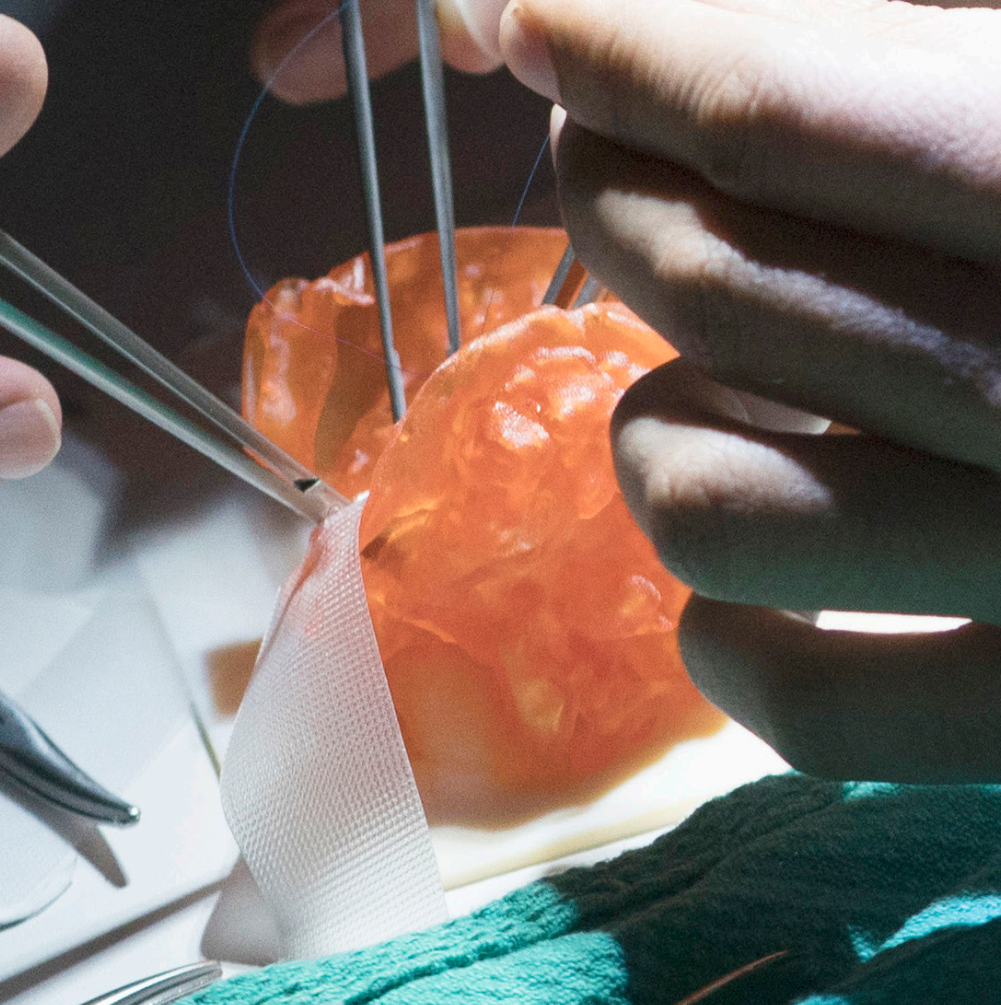
With access to additive technologies, doctors can better understand unique patient morphology, customize patient-specific pre-planning and more accurately predict outcomes. Replicating the patient’s anatomy allows:
- Surgeons to practice methods on realistic models in a low pressure setting with no risk of injuring the patient.
- Doctors can also have extreme precision to confirm that they could use a smaller incision than originally thought, which ultimately reduced recovery time.
- The models created by 3D printers also help surgeons walk patients through the surgery details, giving the patient a sense of understanding and confidence.
In summary, integrating medical models into pre-surgical workflows can have direct positive impacts, such as improved scores of surgeon confidence and reduced OR times, as well as secondary impacts such as reduced complication rates and lower overall mortality, all leading to improved standards of care and economics.
3D Printing Materials for Medical Models
Whether used for surgeon planning, training, or to perform testing during device development, PolyJet printers are among the top choices of printing realistic, highly specialized medical models. The capability of PolyJet printing models mimicking both the appearance and response of human tissue is attributed to the broad range of material properties that PolyJet offers, from rigid to flexible and opaque to transparent. Whether for highly accurate surgical guides, true-to-life medical device prototypes, or strong tooling, custom fixtures, research aids or medical device components, PolyJet printers offer a full range of materials that can meet different applications:
- Agilus30™: Superior tear-resistance and its rubberlike ability to withstand repeated flexing and bending makes it ideal for creating vascular anatomies and soft tissue.
- Tango™ Family: Flexible to replicate soft tissue and vasculature.
- VeroClear™: Transparent, acrylic-like material for visualization of hidden anatomy, such as tumors and blood vessels, within a closed organ.
- Vero™ Family: Vivid, multicolor materials used to distinguish anatomical structures from one another.
- VeroFlexVivid™ Family: Strong and stiff with just the right amount of flexibility.
There are also several Digital Materials unique to PolyJet Digital Anatomy Printer (J5 DAP and J850 DAP) that combine two or three photopolymers:
- TissueMatrix™: An ultra-soft semi-translucent material. Ideal for replicating the look and feel of heart tissue and soft organs.
- BoneMatrix™: A strong, yet semi-flexible, material with memory to maintain its shape, specially designed to simulate real bone with varying densities. It is ivory white, enabling screw insertion, high toughness connective tissue, and resistance to cracking.
- GelMatrix™: A gel-like support material used inside blood vessels and enables removal without rupturing the blood vessel. Easy removal from blood vessels with inner diameters as small as 1mm and wall thickness as low as 1mm. It can be mixed with Agilus cubes for easier removal. Printed models typically have a shelf life of 1-2 months.
If you need a radiopaque material that can block X-rays and other types of radiation, RadioMatrix™ would be a good choice. This material is used in medical models to assist both training and treatment planning. Medical device manufacturers are using it to test, demo, calibrate and tune their medical devices without exposing researchers to unnecessary radiation.
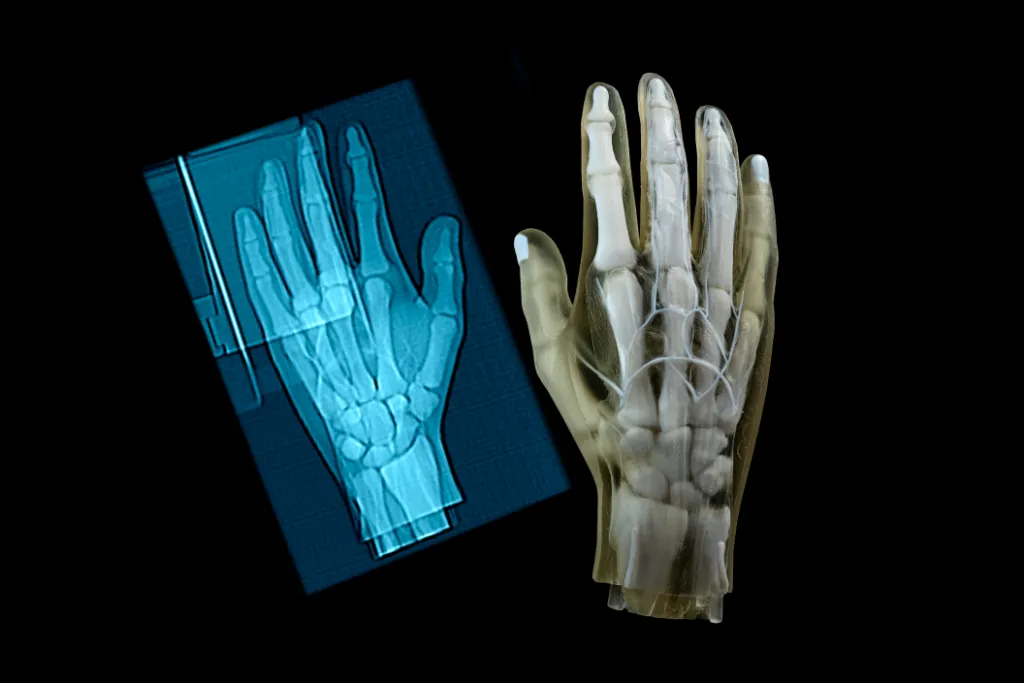
RadioMatrix Medical Material
Check out this blog to know more about how to create accurate, patient-specific 3D printed anatomy models.
3D Printing Technologies for the Medical Field
Different 3D printing technologies apply to various applications in the medical industry. Below is an overview of some popular 3D printers for medical use, including some of the exclusive materials on these printers:
| FDM | SLA | SLS, SAF | DLP | PolyJet | DMLS | |
|---|---|---|---|---|---|---|
| Applications |
|
|
|
|
|
|
| Printers | F370, F370CR, Fortus 450, F900 | Form 4B, Neo | Fuse 1+, H350 | Origin Two | J5DAP, J850DAP, J5MediJet | BOLDSERIES |
| Materials | PC ISO, ABS M30i, ABS M30, ULT1010-CG | BioMed series, Somos BioClear | Nylon 12 & 11, TPU 90A | IND402, IND403, MED412, MED413, 3955, 3843 | RadioMatrix, TissueMatrix, Bonematrix, GelMatrix, Agilus30™, Tango™ Family, VeroClear™,Vero™ Family Vivid, VeroFlexVivid™ Family
| Titanium, Cobalt Chrome, Stainless Steel |
Conclusion
With emerging new materials and techniques, 3D printing has changed product development in the medical device industry, as well as surgical planning and physician education in the healthcare industry. Contact our team of experts if you want to learn more about products and services in this ever-growing industry.

Written by Sophie Jin
Sophie (Huiyu) Jin is an SEO/PPC Specialist at TriMech, where she focuses on digital marketing strategies for their additive manufacturing and CAD business units.
Prior to joining TriMech, Sophie worked as a business journalist both in Canada and China, covering various industries, particularly tech companies.
Related TriMech Solution
Learn more about the solutions featured in this Article:
Need a Quote for Advanced Manufacturing?
Contact a TriMech manufacturing expert today and get answers to your questions
Related Content
More advanced manufacturing content from the TriMech team