




 By
By How much does a 3D printer cost? Understanding 3D printer price is important for justifying your purchase decision.
In this 3D printer price guide, we will give a thorough breakdown of a 3D printer price based on different printing techniques, covering both fixed cost, mainly the 3D printer price itself and post-processing equipment, as well as variable cost including materials and consumables.
Deciding whether to invest in a 3D printer can be complex. Our article provides guidance on choosing a 3D printer by listing the top 10 questions to consider. It also discusses when it might be better to outsource 3D printing instead.
Cost breakdown for owning a 3D printer
The cost of owning a 3D printer can be split into two parts: fixed cost and variable cost.
Fixed cost:
- Machine cost
- Additional facilities and equipment including post-processing devices
- Maintenance kits
- Service contracts including installation and training
- Software licenses
Variable cost:
- Materials
- Consumables
- Electricity
- Labor
As the most significant upfront investment, a 3D printer price has a wide range from $100 to $1 million, depending on different 3D printing technology types and capabilities.
The chart below is a general 3D printer price comparison of some popular professional 3D printers and industrial 3D printers with different printing techniques:
| Category | Professional | Mid-Range Industrial | High-Level Industrial |
|---|---|---|---|
| Price range | $3K-10K | $10K-100K | $100k+ |
| FDM | Ultimaker, MakerBot | F170, F370, F190CR | F770, Fortus 450mc, F900, F3300 |
| PolyJet | J35 Pro | J55 Prime, J850, J826 | |
| SLA | Form 3 | Neo | |
| DLP | Origin | ||
| LCD(mSLA) | Form 4 | ||
| SLS | Fuse 1, Fuse 1+ | ||
| SAF | H350 |
To give a quick review of different 3D printing techniques, we’ve prepared this video as an introduction.
To summarize the primary purposes of various 3D printing techniques, we use the following chart as a framework for professional and industrial application:
- Design: rapid prototyping of product form, fit, material, color, etc.
- Engineering: rapid prototyping of product function and fit
- Manufacturing aids: parts and tools, require cost-effectiveness in low volume production
- Production: end-use parts, require accuracy, consistency, details, and good throughput
| Design | Engineering | Manufacturing Aids | Production | |
|---|---|---|---|---|
| FDM | * | ** | ** | ** |
| PolyJet | ** | * | ||
| SLA | * | * | ||
| DLP | * | ** | * | * |
| LCD | * | * | * | * |
| SLS | * | ** | ** | |
| SAF | * | ** | ** |
*The technique that applies more often in a certain category of application will have more stars
Fused Deposition Modeling (FDM)
As the most accessible technology, FDM 3D printer price starts from affordable options around $200 with hobbyist 3D printers, all the way up to industrial-grade models exceeding $200,000.

FDM 3D printers
- Printers available from TriMech: F123 series, F123CR series, Fortus 450mc, F770, F900, F3300
- Material Type: filaments
- Post-processing Cost: $3,000+
How does FDM work?
In FDM printing, plastic is heated to semi-liquid and extruded along certain paths to build objects layer-by-layer.
Pros of FDM
FDM is the most common and highly adopted form of 3D printing. Compared to other 3D printing methods, FDM printers are generally more affordable, catering to a broad spectrum of applications from rapid prototyping to producing functional parts.
Cons of FDM
- One drawback of FDM printing is potential visible layer lines on finished prints, which often require post-processing to improve surface finish.
- Additionally, FDM printers may operate at slower speeds with lower accuracy, struggling with intricate details. Factors influencing print accuracy include layer height, nozzle diameter, and the quality of the filament used.
- Mechanical properties of FDM prints can vary significantly depending on materials.
Post-Processing needs of FDM
FDM prints often require support removal and surface smoothing. There are many post-processing options to simply the FDM workflow, such as the PostProcess technologies.
PolyJet
PolyJet printers are generally more expensive, with printer prices ranging from $30,000 to $500,000.

PolyJet 3D printer group
- Printers available from TriMech: J35 Pro, J55 Prime, J8 series
- Material Type: a blend of liquid resin
- Post-processing Cost: $3,500+
How does PolyJet work?
PolyJet works on the principle of inkjet printing. But instead of spraying droplets of liquid ink, it hardens (cures) photopolymer materials instantly with UV light.
Pros of PolyJet
- The technology boasts the widest array of material options in the industry and can blend dozens of colors into a single prototype.
- Its high resolution enables the creation complex shapes, intricate details and smooth surfaces.
- Due to its ability to produce lifelike prints, PolyJet is often used in product design across consumer goods companies and in medical and anatomical applications.
Cons of PolyJet
- Compared to some other printing methods, PolyJet tends to be slower in printing speed and can incur higher ink costs.
- While parts are safe immediately after printing, some materials are UV-sensitive and may degrade over time.
Post-Processing needs of PolyJet
While most resin 3D printers require UV Post-Cure, some printers like J35 has an onboard LED UV lamp to 100% cure parts during printing process, eliminating the concern about resin-based systems. Once the part comes off the tray, all you need to do is to remove the support get the part in hand.
Even so, there are many post-processing options to further simplify the PolyJet workflow including resin cleaning and post-curing, such as Onulis series.
If you have more questions on the post-processing steps for FDM or PolyJet, please check out our FAQs about post-processing technologies.
Stereolithography (SLA)
SLA 3D printer price starts higher than that of FDM and increases with capabilities influenced by factors such as light sources, light processing solution, and materials. Price could range from $2,000 to over $200,000.
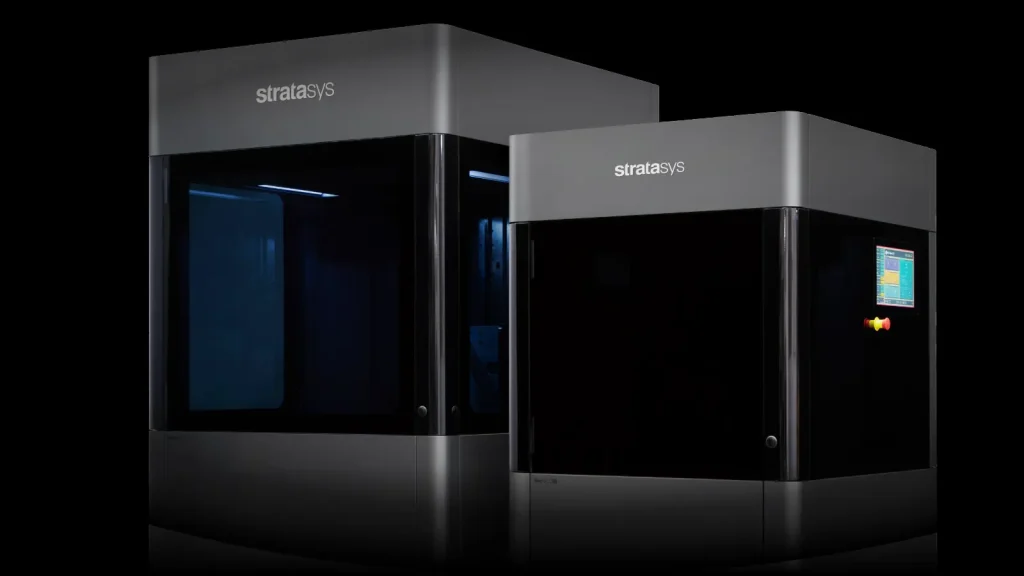
Stratasys Neo Stereolithography
- Printers available from TriMech: Form 3+, Form 3L, Neo
- Material Type: liquid resin
- Post-processing Cost: $1,000+
How does SLA work?
SLA uses a laser to selectively harden liquid photopolymer resin. Unlike PolyJet printers, which can blend multiple materials into one print, SLA printers cure one material at a time.
Pros of SLA
- It stands out for offering high resolution, ultra fine details, and smooth surfaces.
- It is widely used across various industries that require high-precision parts with excellent surface finish and detail, from jewelry, arts, to aerospace and automotive prototyping.
Cons of SLA
- Traditional SLA printers typically require a large resin tank and complex infrastructure, making them less affordable and less friendly for office-environments.
- They also involve more manual handling of potentially hazardous or messy materials.
- To make SLA printers more accessible to smaller companies, some brands have developed with desktop versions such as Formlabs.
Digital Light Processing (DLP)
Similar to SLA printers, DLP printer price rises with larger print sizes and increased complexity.

Stratasys Origin Two printer
- Printer available from TriMech: Origin One
- Material Type: liquid resin
- Post-processing Cost: $30,000+
How does DLP work?
DLP printers cure liquid resin with a precise light projector system layer by layer.
Pros and cons of DLP
- Generally, DLP printers offer faster speed but lower resolution compared to SLA printers, even though they still print with great accuracy.
- They offer higher throughput and rapid production of functional end-use parts.
- The range of materials available for DLP printing may be more limited compared to other technologies like SLA or PolyJet.
Liquid Crystal Display (LCD)
LCD printer price is normally lower than that of SLA and DLP printers.
- Printer available from TriMech: Form 4
- Material Type: liquid resin
- Post-processing Cost: $1,000+
How does LCD work?
The LCD technique is similar to DLP, as they both build parts layer by layer using light projection with a vat of liquid resin. But LCD uses a range of LEDs projected through a masking screen (which is why LCD is used interchangeably with Masked Stereolithography(mSLA)) instead of a light projector in the curing process. This can lead to slight variations in the intensity of light reaching the resin.
The price of a LCD printer is thus affected by factors such as the intensity of the light source, the quality of the LCD screen, and resin properties.
Pros and cons of LCD
- As LCD printers cure the entire cross-section of the build platform at once, they significantly enhance print speed, albeit with potential trade-offs in accuracy due to lower light intensity.
- But because of its higher speed, LCD printing is widely used in rapid prototyping and tooling.
- Like other resin-based printers, LCD printers normally require frequent replacement of consumables such as LCD screen, build platforms, and resin tanks, leading to higher long-term operation costs.
Post-Processing needs of SLA, DLP, LCD
- For resin printers like SLA and DLP, after cleaning the printed object with solvents such as IPA, a UV chamber or post-curing station is used to expose the printed object to additional UV light, in a bid to ensure strength and durability.
- For safety reasons, adequate ventilation is required when handling IPA and during the curing process to minimize exposure to fumes.
- Operators should also wear gloves and safety goggles when handling resin and IPA to protect skin and eyes.
There are many options for resin removal system and UV curing cabinet, including Post Process Demi series, Onulis WRAP Cure, Oryx.
Selective Laser Sintering (SLS)
With better mechanical properties of production-grade parts, SLS printers are often in a higher price bracket.

Formlabs Fuse 1 Workshop
- Printer available from TriMech: Fuse 1+
- Material Type: plastic powder
- Post-processing Cost: $20,000+
How does SLS work?
As one of the categories of powder-based printing technologies, SLS uses high-energy laser to melt and fuse powdered materials layer by layer as the print solidifies into a dense, durable part that is strong in all directions.
Pros of SLS
- The printing process of SLS makes it a good option for functional prototypes and volumized end-use parts.
- Because fused parts are supported by the surrounding powder, SLS printing is a well-suited for producing complex geometries.
- It also supports a variety of materials including plastics, metals, and ceramics.
Cons of SLS
- SLS typically requires significant energy for laser sintering, which can increase operational costs.
- It also involves labor-intensive steps like depowdering to remove excess material.
Selective Absorption Fusion (SAF)
As a new type of powder-based printing technology, SAF is designed for higher-volume manufacturing of end-use parts. It is primarily for industrial applications with much higher initial investment.

Stratasys H350 3D Printer
- Printer available from TriMech: H350
- Material Type: plastic powder
- Post-processing Cost: $20,000+
How does SAF work?
Unlike SLS, which uses a laser to selectively heat and fuse powdered materials, SAF employs an infrared absorbing ink applied onto the powder layer. This ink selectively absorbs the energy from an infrared lamp, locally heating and fusing the powder particles.
Pros of SAF
- Similar to SLS, SAF allows for more design freedom and reduced waste as materials are reusable.
- It can achieve faster build times compared to traditional SLS due to the use of infrared lamps for heating.
- It also consumes less energy compared to SLS.
Cons of SAF
- SAF is currently limited in the material choices compared to SLS, primarily focusing on thermoplastics suitable for high-volume production.
Post-Processing needs of SLS and SAF
Many printers are office-friendly that don’t require additional infrastructure. Printers like FDM, PolyJet, DLP, LCD fall into this category. However, printers such as SLA, SLS, and SAF have specific requirements including dedicated area, ventilation systems, and humidity control.
In addition to facility investment, powder-based printers such as SLS and SAF printers require additional equipment and tools for powder recovery and cleaning.
After printing, parts need to be extracted from the printed result, or “powder cake” in a powder recovery system that also handles powder recovery and mixing.
Then a blasting cabinet is used to remove powder residue, followed by additional post-processing steps like polishing. The powder should be stored in a dry, controlled environment to prevent moisture absorption and contamination.
Personal protective equipment (PPE) is mandatory when handling powder and performing post-processing tasks.
There are also many options for streamlining the post-processing workflow of powder-based 3D printing, including Fuse Sift and Fuse Blast, Stratasys’ depowdering system and DyeMansion Powershot C.
Cost of 3D Printing Material
3D printing materials represent the most significant recurring expense in 3D printing, with costs varying widely based on type and specifications such as tensile strength, support requirements, heat resistance, elongation, and elasticity.
Filaments
Filaments are versatile for prototyping and functional parts, though they may have limitations in strength and surface finish, generally making them more affordable compared to resin and powder options. Prices typically range from $20 to $200 per kg depending on the material.
- As the most popular filament among entry-level users, PLA has the lowest cost, normally ranging from $20 to $30 per kg.
- ABS is suitable for more resilient parts with its durability and strength, normally ranging from $25 to $40 per kg.
- PETG has improved impact resistance than ABS and is more flexible and less brittle compared to PLA and ABS, with a price range of $22-$50 per kg.
In addition to the three kinds of standard plastics mentioned above, there are also engineering plastics such as Polycarbonate and Nylon that can cost over $60 per kg.
Besides, high-performance thermoplastics such as Ultem 9085 has high strength-to-weight ratio and is favored in the transportation industry, normally cost over $800 per kg.
Resin
Liquid photopolymers are normally higher in cost as they are specialized chemistry that cure under UV light. Prices range from $50 to $500 per liter.
Some resin can be wasted due to supports and cleaning process. As support structures are necessary in resin printing to hold up overhanging parts, the support need to be removed manually.
After support removal, the printed object often has residual of uncured resin on surface that require to be placed in a bath of Isopropyl Alcohol (IPA) to dissolve. IPA typically cost $20-$40 per gallon.
If you want to know more about resin, check out our material catalog!
Powder
Powders used in powder bed fusion demand precision and purity, leading to higher costs compared to filaments and resins. They offer excellent mechanical properties and impact resistance. Prices vary widely based on material type, ranging from $50 per kg to $600 per kg.
- Nylon powders usually range from $50 to $150 per kg. Check to know more about the two main powder materials on the market: Nylon PA11 and PA12.
- Aluminum and stainless steel powders can cost from $100 to $300 per kg.
- Titanium powders that are lightweight, high-strength and biocompatible could be over $300 per kg.
- Other specialty materials could cost even higher with price over $600 per kg.
However, the material utilization rate of powder is higher as unfused powder could be recycled and mixed with fresh powder to reuse.
The table below summarizes main factors impacting 3D printer price. These are general comparison between different types of printing techniques, as these factors will have to be based on specific conditions. For examples, the throughput impacting the print time of SLS and SAF printers depends on whether the build chamber is densely packed or not.
The following chart is a summary of factors impacting the 3d printer price:
| Accuracy & Resolution | Print Time | Material Cost | Additional Equipment | Maintenance & Labor | |
|---|---|---|---|---|---|
| FDM | * | * | *** | *** | *** |
| PolyJet | **** | ** | * | ** | ** |
| SLA | **** | ** | ** | ** | ** |
| DLP | ** | *** | ** | ** | ** |
| LCD (mSLA) | ** | *** | ** | ** | ** |
| SLS | *** | ** | * | * | * |
| SAF | *** | ** | * | * | * |
*For a certain factor, techniques with better performance of cost-effectiveness will have more stars. If you want to learn more about different 3D technology solutions and material comparison, download our 3D Printer Buying Guide.
Software cost for 3D printing
Slicing software plays a crucial role in 3D printing by converting 3D models into printable instructions through a process known as “slicing”.
While basic slicing software often comes with the purchase of a 3D printer, advanced features and capabilities typically require additional investment.
While much software is versatile and compatible with multiple 3D printers, some 3D printing software has more powerful features that apply to specific industries or certain types of 3D printer, which will also be higher in price.
Outsourcing vs In-house 3D Printing
By purchasing and owning 3D printers, you have control over the entire process, from design iteration to production.
However, for printing projects that are outside of your capabilities, whether it is equipment, material, or expertise, outsourcing the printing work to a 3rd-party service bureau might be a more reasonable option.
What factors should be considered when deciding whether outsourcing or not?
- Are you using 3D printing for one-off concept models, 20-30 end use parts per month, or 10,000 production parts? The answer will make a huge difference in deciding if you should consider outsourcing. The volume of parts and frequency will impact the cost per part, and ultimately impact your ROI.
- Do you have the level of expertise available within your organization for operating and maintaining 3D printers, optimizing designs, and troubleshooting issues? The additional time and investment in skilled operators such as training is another investment in calculating your ROI.
- Another factor to consider is your project timelines. How critical flexibility and responsiveness are to your projects? In-house printing normally offers quicker turnaround time greater flexibility for design iterations and urgent needs.
What will you get by outsourcing 3D printing to TriMech?
- No upfront investment and dedicated space
- Access to advanced equipment and experts that are knowledgeable in materials, technologies, and design
- Cost-effective for occasional or one-off projects
- Reduced risk of challenging parts and projects
- Control over quality and delivery and minimal lead time
- Zero risk of IP issue
To understand more thoroughly about outsourced 3D printing, ask our advanced manufacturing services team. There is also a behind-the-scenes look at the AMS team.
Top 10 questions any person should ask when purchasing a 3D printer
In addition to the 3D printer price, what are the main factors to consider when buying a 3D printer? When looking to buy a 3D printer, it’s crucial to ask yourself and potential suppliers the right questions.
Here’s a guide to help you navigate this decision:
Top 5 questions for yourself:
- What specific goals or outcomes do I aim to achieve with this 3D printer?
- Are you looking for a hobbyist 3D printer that can be used for small projects or a professional 3D printer for business purposes?
- How frequently do I anticipate using the printer?
- How is the current process for achieving these goals working for me?
- Are there current challenges or difficulties with the existing process that a new printer could address?
- What are my qualifications or criteria for a new printer to meet that can be considered a successful replacement?
Top 5 questions for the organization providing the 3D printing solution:
- Can your solution help me overcome my problem?
- Does your solution have flexibility to help with other problems we run into throughout our organization?
- Is your solution Reliable, Accurate, and Repeatable?
- What is your support structure in the event of technical issues or downtime with the printer?
- What expertise and technical resources does your organization provide to help optimize the use of the printer and solve any arising challenges effectively?
Want to understand the ROI for your new 3D printing project?
Deciding whether to invest in a 3D printer should be based on your unique circumstances and objectives. Companies must pinpoint specific factors to determine if the investment aligns with their self-defined ROI goals.
If you are struggling to decide on the key factors including 3D printer price, material cost, and other ancillary equipment investment, let our 3D printing experts help you through the process.

Written by Sophie Jin
Sophie (Huiyu) Jin is an SEO/PPC Specialist at TriMech, where she focuses on digital marketing strategies for their additive manufacturing and CAD business units.
Prior to joining TriMech, Sophie worked as a business journalist both in Canada and China, covering various industries, particularly tech companies.
Related TriMech Solution
Learn more about the solutions featured in this Article:
Need a Quote for Advanced Manufacturing?
Contact a TriMech manufacturing expert today and get answers to your questions
Related Content
More advanced manufacturing content from the TriMech team